Silly Shepherds · approximately 6 minutes to read
One day, you notice it. Not all at once, but little by little.
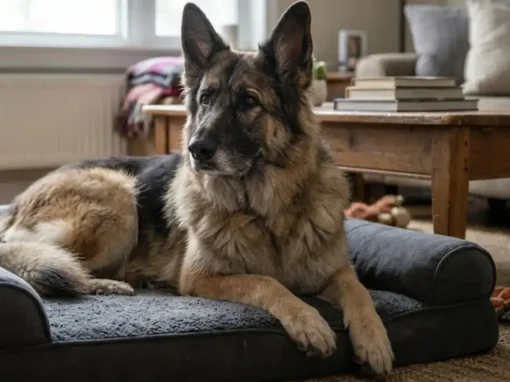
He takes a little longer to get up. Stops more often on walks. His muzzle is grayer than you remember.
And somewhere along the way, in the middle of everyday life, it hits you: my shepherd is getting older.
That can be hard to take in. You still remember the dog who was always first to arrive whenever anything happened. The one who was ready for another walk before you had even taken your shoes off.
But getting older doesn’t mean the fun is over. It does mean taking a fresh look at what your dog needs. What still comes easily? What takes more effort? And which changes deserve more attention than simply saying, “He’s just getting old”?
Contents
How Long Do German Shepherds Live?
German Shepherds live about 10 years on average. A large UK study by the Royal Veterinary College (VetCompass, 2017) found a median lifespan of 10.3 years. Half of the dogs lived between 8 and 12 years, and some live longer.
How long your shepherd lives is partly in your hands. A lean body, exercise that suits their age and timely visits to the vet make a real difference. In the same study, bone and joint problems and being unable to stand were the most common reasons for saying goodbye. That is why it pays to watch for those signs early. Read our article on hip dysplasia in German Shepherds as well.
When Is a German Shepherd Considered a Senior?
There’s no birthday that suddenly makes your shepherd a senior. Around seven to eight years of age, it makes sense to pay closer attention to his changing needs. How aging unfolds varies from dog to dog.
One shepherd may still happily enjoy his usual walks. Another may already need more support.
His age gives you a general guide. How he moves, eats, sleeps, and behaves tells you how he’s doing.
Slowing Down: Look Beyond Age
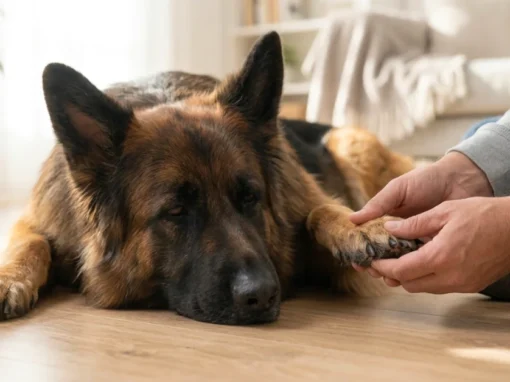
A dog who struggles to get up may be dealing with more than a little stiffness. Pain could be part of the picture, too. In older dogs especially, changes caused by chronic pain are easily mistaken for normal aging.
Watch for signs such as:
- Hesitating before getting into the car.
- Taking longer to get moving after sleeping.
- Falling behind on a familiar walk.
- Showing less interest in playing.
- Reacting differently when you touch him.
You don’t have to work out the cause at home. But you can have him checked to find out why something has changed.
A short video of your dog getting up or walking can help your veterinarian. He may move differently at the clinic than he does at home.
Does your shepherd have joint problems? Read our article on hip dysplasia in German Shepherds.
Teeth, Eyes, and Hearing Deserve Attention
Not every change is immediately obvious.
A dog who drops kibble or chews differently may have a dental problem. Responding less reliably to his name could be related to his hearing. Bring up changes like these at his checkup.
You may notice a bluish-gray haze in an older dog’s eyes. This can be a normal change in the lens, but it is not the same as a cataract. Have your veterinarian assess what you’re seeing, especially if your dog also seems to have trouble seeing.
It helps to describe changes as you notice them at home. “He’s recently started hesitating at the back door” gives your veterinarian more information than simply saying, “His eyesight is getting worse.”
When Your Older Shepherd Starts Acting Differently
Your dog stands on the wrong side of the door. Paces restlessly at night. Or suddenly starts having accidents indoors after years without a problem.
These changes can be signs of cognitive dysfunction: a decline in abilities such as memory, learning, and finding his way around. But pain, reduced vision, hearing loss, and other medical conditions can cause similar signs. That’s why a veterinarian also needs to check for other possible causes.
Signs to discuss include:
- Getting lost or stuck in familiar places.
- Changes in his sleep pattern.
- Suddenly having accidents indoors.
- Changes in how he interacts with people or other animals.
- Wandering aimlessly or showing less interest in familiar activities.
Make a note of when it happens and how often. One restless moment tells a different story than a pattern that keeps returning.
Does an Older German Shepherd Need Different Food?
Not automatically.
Many older dogs need fewer calories, while maintaining muscle becomes especially important. Simply feeding less isn’t always the best answer. Consider his weight, body condition, muscle mass, activity level, and any medical conditions.
A senior diet may be a good fit. A well-balanced adult diet may be suitable, too. The choice depends on your dog.
At his checkup, discuss more than just his weight. Ask whether he is losing muscle, too. The number on the scale can stay the same even while his body changes.
Read more in our article on feeding your German Shepherd.
Unintentional weight loss or noticeable weight gain deserves investigation. Don’t simply change how much you feed without looking into the cause.
Keep Moving, at a Pace That Fits
An older dog still needs exercise and things to enjoy. What he can comfortably manage depends on his health and any pain he may have. If his movement is limited, discuss a suitable exercise plan with your veterinarian. Rehabilitation support may also help.
A relaxed walk with plenty of time to sniff, for example, may suit him better than repeatedly chasing a ball. Give him time to look around, explore the smells, and find his own pace.
Pay attention to how he feels afterward, too. Is he noticeably stiffer later that day? Does he struggle more to get up the next morning? Share those observations with your veterinarian.
Spending time together doesn’t have to mean a long training session, either. A simple scent game or a familiar exercise can be a lovely moment in his day. Keep it manageable and stop before your dog becomes frustrated.
Make Life Easier at Home
Take a look at the routes your dog follows every day.
Does he have to cross a slippery floor to reach his water bowl? Is his bed in a busy part of the house? Does he keep having to jump onto or off things?
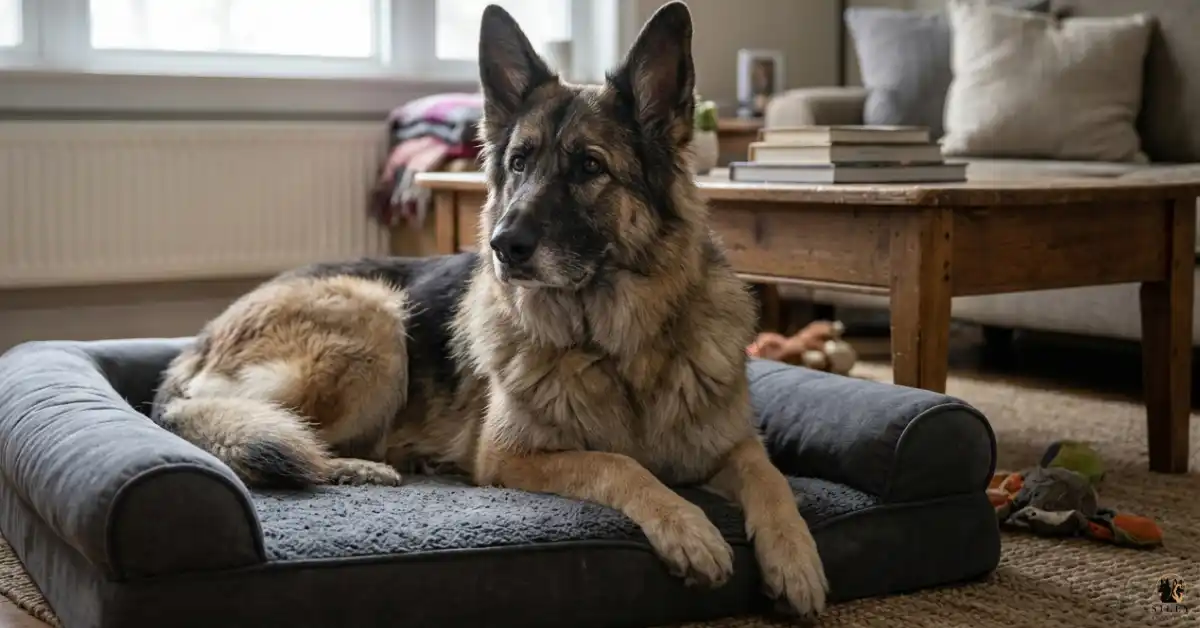
Non-slip surfaces, a comfortable place to rest, and safe assistance with steps or changes in height can make daily life easier. Changes at home are also part of managing chronic mobility problems.
You don’t have to change everything at once. Start with the situations where you can see him struggling.
Schedule Checkups, Even If He Still Seems Well
The American Animal Hospital Association (AAHA) recommends veterinary checkups every six months for senior dogs. Which tests are appropriate depends on the dog and what the veterinarian finds.
A checkup involves more than a blood test. Your veterinarian will assess your dog’s physical condition, teeth, movement, and behavior, among other things. Blood and urine tests can provide additional information. A single blood test does not automatically assess every organ or rule out every medical condition.
Bring your own observations. You’re the one who sees the small changes between appointments.
Some symptoms can’t wait. A suddenly swollen abdomen, especially along with restlessness and repeated attempts to vomit without bringing anything up, can be a sign of gastric dilatation-volvulus (GDV), often called bloat. Call your veterinarian or an emergency veterinary clinic immediately.
There’s Still Plenty to Enjoy Together
The walks may get shorter. Putting on his leash may take a little longer because he needs time to get up.
It’s okay to make room for that. You don’t have to keep measuring him against his younger self.
Look at the dog in front of you today. Help him when things become difficult, and give him room to enjoy the things he still loves.
A gray muzzle waiting by the door. A nose that still knows exactly where the food is kept. A walk together, at his pace.
That, too, is life with a German Shepherd.
Do you have a senior shepherd at home? Which change has made the biggest difference for you and your dog? Share your experience in our Silly Shepherds Facebook group.
🐕 Experience, with the Facts in Mind
We write from nearly thirty years of living with German Shepherds. We are not veterinarians. We identify personal experiences as personal experiences and support medical information with reliable sources. If your dog has symptoms, seek advice tailored to your own dog.
Sources
- AAHA — Senior pet checkups and preventive care
- AAHA — Nutrition for senior dogs and cats
- AAHA — Pain management in senior pets
- AAHA — Evaluating the healthy senior pet
- ACVO — Changes in the eye lens and cataracts
- Wrightson et al. — Medical conditions and cognitive decline in senior dogs
- ACVS — Gastric dilatation-volvulus (GDV)
Read next
- Feeding Your German Shepherd — Kibble, BARF, or Fresh Food: What Works for Your Dog?
- The German Shepherd Coat — Grooming, Shedding, and Everything in Between
- The book: The dog who would walk through fire for you
The book
Sound familiar? In my book you’ll learn how to handle it.
Practical exercises, clear boundaries and no dominance theory. From 30 years of living with German Shepherds.
Buy on Amazon →E-book on Google PlayMore about the book