Loose-leash walking: teaching your Shepherd to stop pulling
I remember exactly which street it was.
A quiet neighborhood. A weekday morning. On our way to the park.
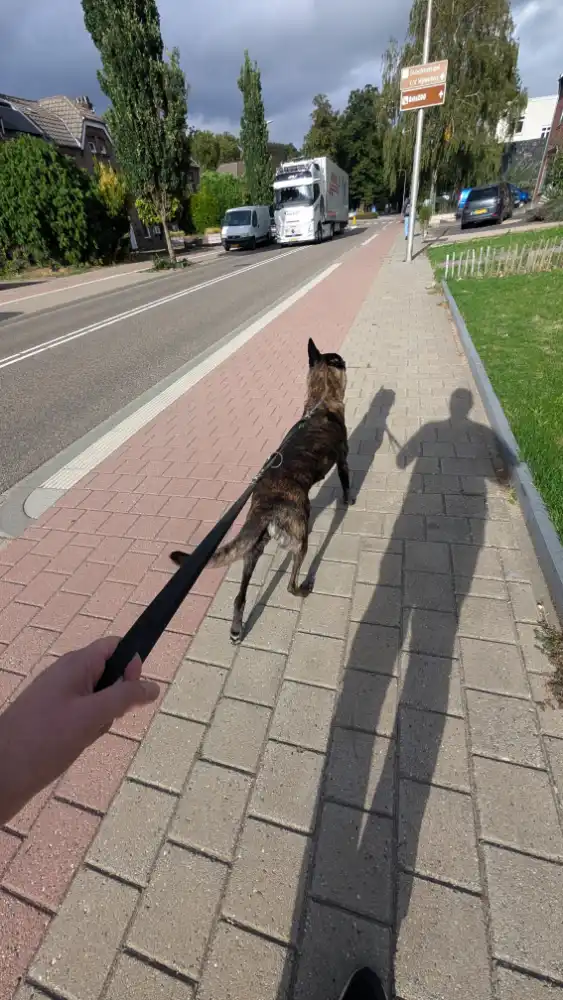
A cat came out of a hedge, and in a split second the leash went tight as a guitar string. Instinctively, I pulled back. My dog pulled harder.
For a few seconds, we stood there: my arm hurting, me feeling embarrassed by a passerby’s stare, and her completely focused on that cat.
Once the cat disappeared, we carried on as if nothing had happened.
But something had happened. My dog had once again experienced that pulling eventually got her moving. I had reinforced the very thing I was trying to change.
This is the approach I’ve come to use after thirty years and four German Shepherds. It isn’t a miracle cure, and I’m not a behavior specialist. It’s what has worked in everyday life with my dogs.
Why boundaries often don’t work
I keep seeing two patterns. I’ve fallen into both myself.
The first is a rule that applies sometimes, but not others.
The dog isn’t allowed on the couch. Except on a tired evening, when you make an exception because “she’s been so sweet today.”
You can teach a dog that the couch is allowed by invitation. But if you haven’t taught that distinction, changing the rule can make it harder for her to understand what you expect.
The second is responding too late.
You only step in once your dog is already pulling, barking, or lunging. At that point, she may be too worked up to respond to an exercise she can manage easily somewhere quieter.
What makes a boundary clear
For me, three things matter: timing, predictability, and consistency.
Notice the change early. Make your response understandable. Give your dog plenty of opportunities to succeed.
My leash rule is simple:
A loose leash gets us moving. Pulling doesn’t get us closer to what the dog wants.
That’s the training goal. Getting there takes practice, especially around distractions. Rewarding loose-leash walking and stopping forward movement when pulling begins is also the approach described by Dogs Trust. Dogs Trust
What you need
A regular leash, comfortable and properly fitted walking equipment, your marker signal—“yes!” or a clicker—and something your dog values.
That might be a small treat, attention, or permission to move forward and investigate a smell.
Has your dog learned what the marker means yet? If not, start with our training article about building name response and attention.
Timing matters. So does choosing an environment where your dog can actually learn.
Step by step
- Notice the first tension.
You may see your dog shift her weight forward before she starts pulling hard. Pay attention early. Better still, reward her while the leash is already loose. - Stop moving forward.
Don’t jerk the leash or pull back. Simply stop allowing pulling to move her toward the thing she wants. - Give her a moment.
She may pull harder at first because the old approach isn’t working. Stay calm. If she remains highly distracted, becomes distressed, or starts lunging, create more distance and make the exercise easier. This isn’t a contest over who can wait longest. - Mark the slack.
The moment the leash loosens, say “yes!” or click. A glance toward you is useful too, but for this exercise, make sure you’re rewarding a loose leash rather than eye contact while she’s still pulling. - Reward and continue.
Give a treat near your leg, or move forward again if that’s the reward she wants. Keep rewarding successful walking before the leash tightens, so the lesson isn’t always “pull, stop, come back, get a treat.”
Start somewhere quiet. Keep sessions short. Add distractions gradually.
The difference from my encounter with the cat is simple: instead of getting into a pulling match, I give my dog a clear way to succeed.
A loose leash makes good things happen.

Clear doesn’t have to mean harsh
Maybe this sounds too gentle for a breed with so much drive and strength.
I understand that doubt.
But you can have a clear rule without yanking the leash or raising your voice. The consequence is understandable: pulling stops forward progress; a loose leash allows it.
Consistency matters, but so does judgment.
If your dog is frightened, overwhelmed, or in an unsafe place, help her out of that situation. You can practice again somewhere easier.
The aim is a dog who understands how to walk with you—and can manage it in the situation you’ve chosen.
Common mistakes
- Letting pulling regularly get results. If pulling often reaches the smell, dog, or destination, it remains worth trying. One mistake doesn’t erase your progress, but repeated mixed messages make learning harder.
- Repeating commands your dog can’t respond to. Keep things simple. If she can’t engage with you, reduce the difficulty.
- Focusing only on stopping mistakes. Reward the walking you want, including those easy moments when the leash is already loose.
- Starting in the hardest situation. Begin with small distractions and work up gradually.
- Turning the walk into a pulling match. If you need to keep hauling your dog away from something, increase the distance and reconsider the setup. Safe handling matters, but restraint alone doesn’t teach the walking skill.
Where it got harder: Odin
With Zara, whom I trained from puppyhood, this was fairly straightforward.
Odin was a different story.
I took him in from a family when he was almost two. No basic manners. No commands. Not even “sit.”
He’s strong and reacts intensely to certain things around him. When he becomes overwhelmed, it can feel as though he can no longer see or hear me. He lunged at other dogs, and my attempts to interrupt him weren’t getting through.
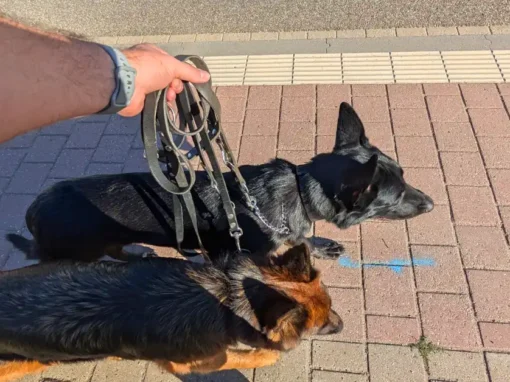
I tried managing him with the rope leash and giving him freedom off leash. That didn’t work safely for him at that stage.
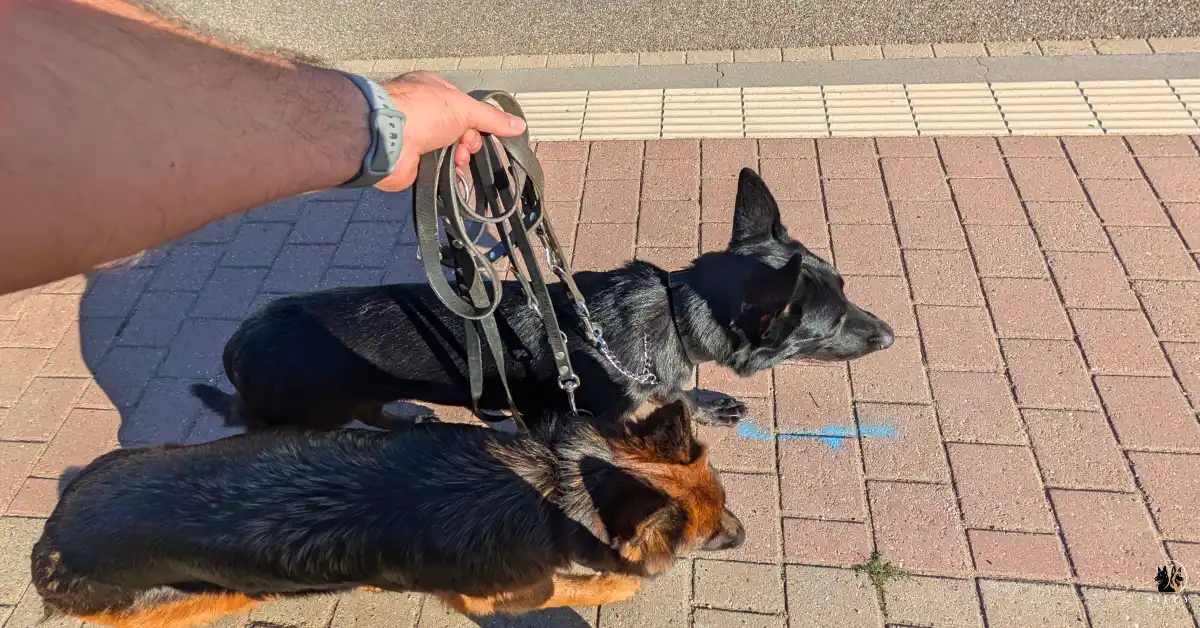
That’s why I have used a choke chain with Odin. It has been a fallback, not something I’m enthusiastic about. My intention has been to interrupt his reaction so we can continue training.
That intention doesn’t make a choke chain painless or risk-free.
This is an honest account of what I have done, not a recommendation to copy it. AVSAB recommends reward-based training and advises against choke chains and leash corrections, including for behavior problems. avsab.org
The advice I do want you to take from this is: create more distance from whatever triggers your dog, build up gradually, and get help from a qualified trainer or behavior professional who uses reward-based methods.
You can follow Odin’s full story in his diary.
When to move on
Can your dog keep the leash loose somewhere quiet, even with a small distraction?
Then gradually make the exercise a little harder.
Keep the same pattern: notice early, stop forward progress when pulling starts, and reward the return to a loose leash. Continue rewarding good walking along the way.
If your dog becomes overwhelmed by another dog or another trigger, increase the distance rather than demanding more from her in that moment. Dogs Trust
The wider principle—making the desired behavior worthwhile—also applies to greeting people without jumping and waiting calmly while you prepare food. We’ll cover those in future training articles.
If things aren’t going as described, or you’re unsure about your dog’s reactions, ask an experienced trainer or behavior professional to help.
Want to learn more?
The full explanation, including the finer details, is in Chapter 4 of The Language of the Shepherd.
Where does it get difficult for you?
At the front door? Around other dogs? At every interesting smell?
Share your experience in the Silly Shepherds group, and we’ll help you think through where to start.