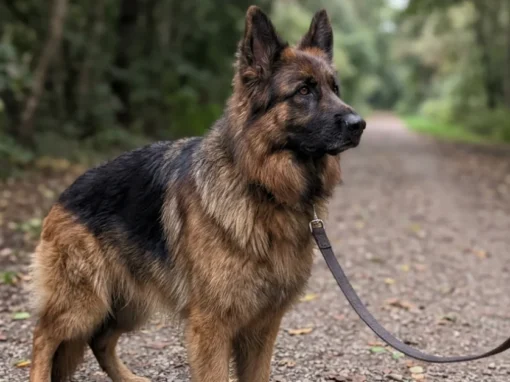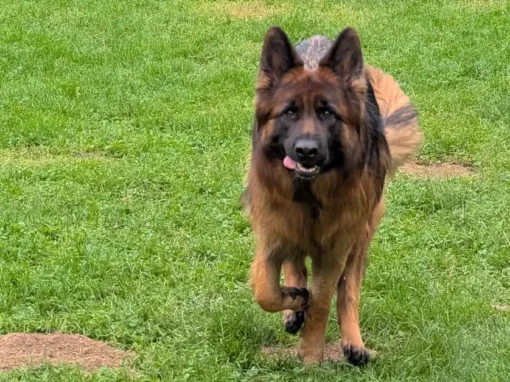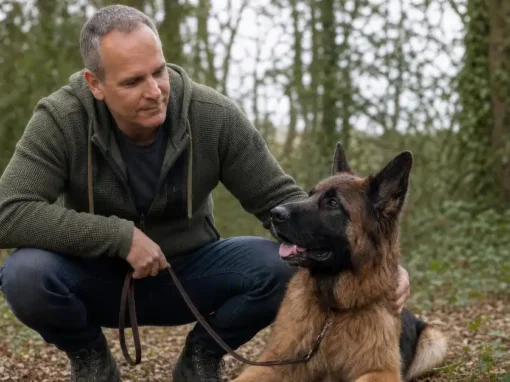
You say his name, and he watches a sparrow. You say it again, a little louder, and he watches the neighbor’s dog.
Sound familiar?
I once stood exhausted in the yard, a bag of treats in my hand and my voice becoming increasingly desperate, trying to get my dog’s attention.
Nothing worked.
What I hadn’t understood yet: attention doesn’t start with calling louder. It starts with noticing the moment your puppy chooses to look at you—and making that moment worth repeating.
From there, you can teach him that his name means: Turn your attention toward me.
Why Repeating His Name Doesn’t Help
When your puppy is absorbed in something exciting, getting his attention may be harder than you expect.
You say his name. Nothing happens.
So you say it again.
And again.
Repeatedly using his name without a response can turn it into background noise.
A useful starting point is to reward attention he offers freely. Wait for him to turn toward you, however briefly, and make that moment worthwhile.
I call this a voluntary check-in.
It seems like a small detail. But it gives you something valuable to build on.
Why Timing Matters
I once thought I had rewarded my dog for sitting.
I asked her to sit. She sat. I went to the kitchen for another piece of sausage and came back with her reward.
But several things had happened in between.
She had lain down, sat up again, looked at the door, and looked at me.
What exactly had I rewarded?
I wasn’t sure.
And I had given her very little reason to be sure either.
Rewards are clearest when they follow the behavior promptly. If you wait too long without marking the moment, you may reinforce something other than what you intended.
That explained a lot about my earlier attempts.
I had been playing a kind of training lottery.
The Marker
A marker helps connect the right moment with the reward.
It is a short, consistent signal that tells your dog: That was it. Your reward is coming.
I use the word “yes!”, said in a consistent way.
Some people prefer a clicker.
Either can work. Choose a clear signal and follow it with a reward.
The marker identifies the behavior you liked, giving you a brief moment to deliver the food. It still helps to have your treats ready rather than making your dog wait.
Your puppy first needs to learn what the marker predicts.
That was a step I skipped in the beginning.
What You Need
- A leash.
- Small treats your puppy enjoys.
- A marker word or clicker.
- A quiet place, such as a room at home or your backyard.
Step by Step
1. Introduce Your Marker
Say “yes!” and immediately give a treat.
At this stage, you are teaching the connection between the sound and the reward.
Practice a handful of repetitions in short sessions. Around twenty repetitions spread across several sessions can be a starting point, but there is no magic number.
When your puppy hears the marker and starts anticipating a treat, the association is developing.
2. Begin With Voluntary Attention
Choose a quiet place.
For this part of the exercise, don’t say his name or lure him toward you with food.
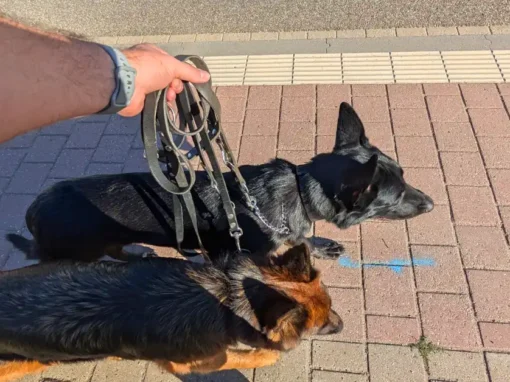
Let him explore calmly on a loose leash.
3. Mark the Check-In
The moment he turns his head toward you or briefly looks at you, say “yes!”
You do not need a long, fixed stare.
A quick check-in is enough.
4. Reward Beside Your Leg
Deliver the treat beside your leg.
The marker identifies the moment; the reward makes checking in worthwhile.
Keep the sequence clear: look toward you, marker, reward.
5. Add His Name
Once he is regularly offering check-ins, practice in an easy setting when he is only mildly distracted.
Say his name once.
When he turns toward you, mark that response and reward him.
If he does not respond, avoid repeating his name louder. Reduce the distraction and make the next attempt easier.
Continue rewarding voluntary check-ins too. You are building both spontaneous attention and a response to his name.
6. Practice in Different Places
Move gradually from familiar, quiet surroundings to places with more distractions.
Change one thing at a time.
In the beginning, you may get only a few voluntary check-ins during a walk. That is normal.
With practice, your puppy may start looking toward you more often because he has learned that doing so is worthwhile.
From Easy to Difficult
One mistake I made repeatedly was increasing the difficulty too quickly.
A busy intersection with ten distractions is a poor place to introduce this exercise.
If your puppy cannot disengage from what is happening around him, make the setting easier.
Begin somewhere quiet, with very little competing for his attention.
Add distractions when the easier version is going well.
That may feel slow. It is usually more productive than repeatedly asking for something your puppy cannot yet do.
Common Mistakes
- Repeating his name. Say it once during name-response practice. If he cannot respond, make the next attempt easier.
- Calling or luring during the voluntary check-in stage. In that stage, you are waiting for attention he offers himself.
- Marking too late. Mark as he turns toward you, rather than after he has looked away again.
- Skipping the marker introduction. Your puppy needs to learn that the sound predicts a reward.
- Rewarding different behaviors unintentionally. If you want calm attention, deliver the reward before the interaction becomes jumping or grabbing.
- Starting somewhere too busy. Give him a realistic chance to succeed.
When to Move On
Build from fewer distractions to more.
Move forward when your puppy responds comfortably and consistently at the current level. If the response becomes unreliable, take a step back.
Precise reward timing is the second pillar of my method.
Clear boundaries help your dog understand what is expected. Marking and rewarding success helps him recognize what works.
These check-ins also give you a useful foundation for the next training exercise: loose-leash walking.
If you are unsure about your timing or your puppy’s response, an experienced reward-based trainer can help you adjust the exercise.
Want to Learn More?
Chapters 5 and 7 of The Language of the Shepherd cover reward timing and the marker in more detail.
How Is It Going for You?
How often does your puppy check in with you voluntarily during a walk?
Share your experience in the Silly Shepherds group, and we can help you think it through.