German Shepherd Adolescence: Where Did My Well-Behaved Puppy Go?
Silly Shepherds · About an 8-minute read
She responded to her name. She stayed down when you asked. You thought: This is going beautifully. I have a wonderful dog. I’m doing a wonderful job.
And then adolescence arrived.
Suddenly, your dog seems to have forgotten everything she ever learned. She pulls on the leash. Ignores your recall. Looks straight at you while doing exactly what you were trying to prevent.
And somewhere in those eyes, you see something suspiciously close to: “What are you going to do about it?”
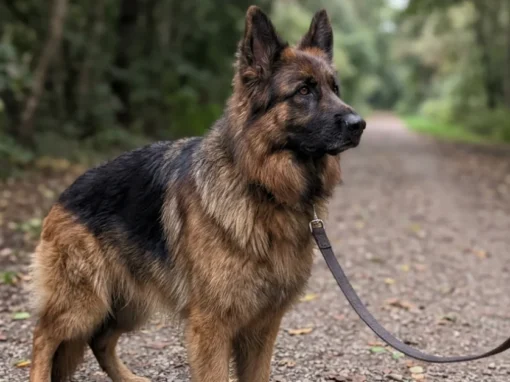
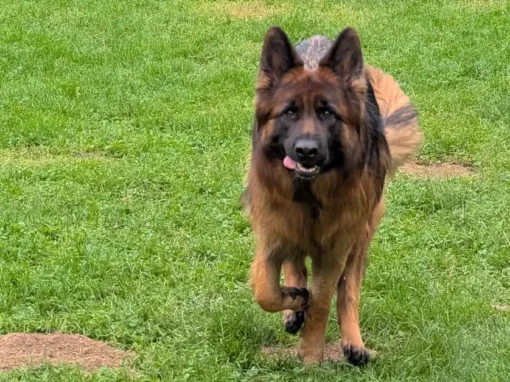
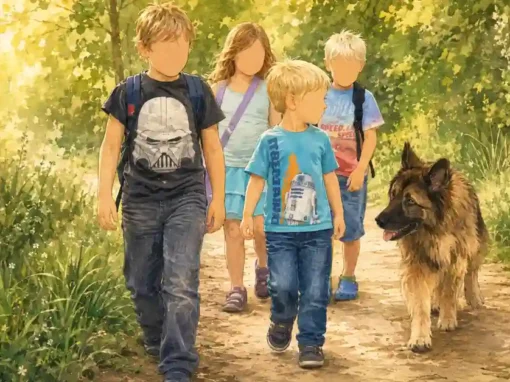
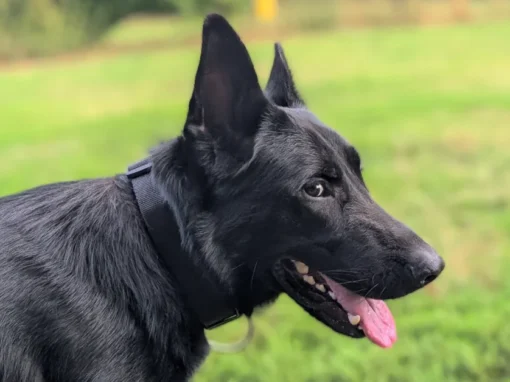
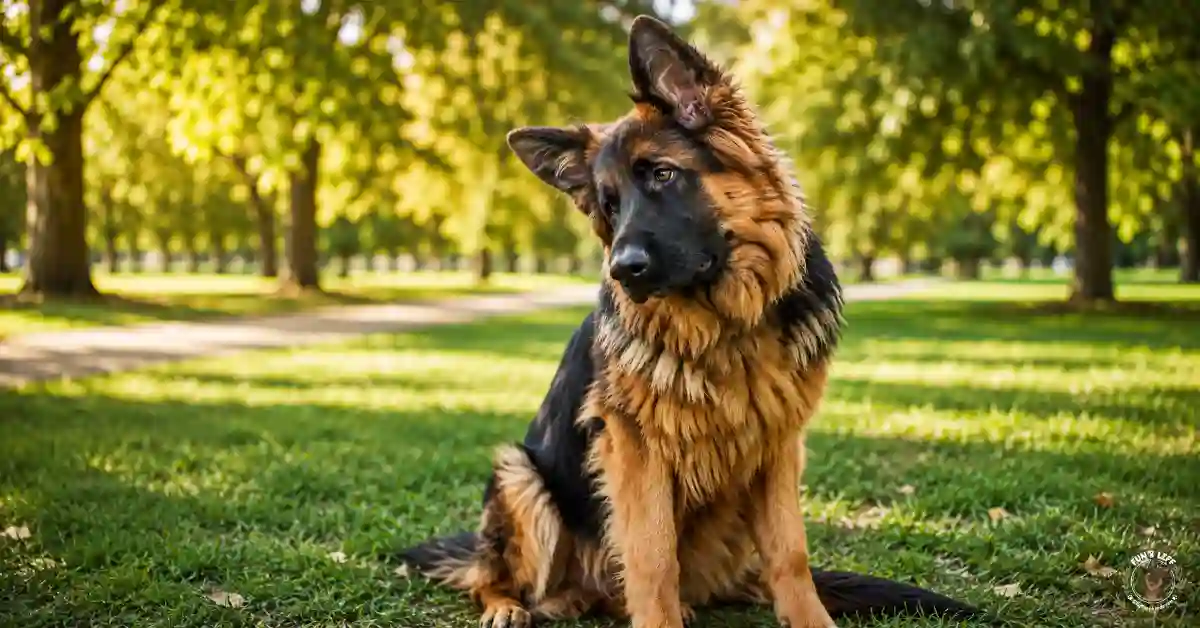
We know the feeling. We’re living it with Zara, our two-year-old long-haired German Shepherd, who officially has a pedigree and unofficially behaves like a cat with a jetpack.
This article explores German Shepherd adolescence: when it starts, what you might notice, and how to get through it without losing your mind.
When Does German Shepherd Adolescence Begin?
Adolescence often starts around six months, although timing varies considerably between dogs.
Puberty and adolescence are not quite the same thing.
Puberty refers to sexual maturation. Adolescence includes the broader behavioral and social changes that happen as a dog develops toward adulthood.
A large dog such as a German Shepherd may continue maturing well into the second year, sometimes longer. There is no exact birthday on which every dog becomes mentally mature.
With Zara, we noticed the change around her first birthday.
Until then, she had been eager to learn. She responded well, walked nicely beside us, and followed familiar cues.
Then something shifted.
Not overnight, but quickly enough to catch us off guard.
Research has found a temporary reduction in responsiveness to an owner during adolescence in some dogs. That does not mean every dog follows the same pattern—or that every training difficulty is caused by adolescence.
Still, it can feel like a very long phase when you’re walking a teenager in a Shepherd suit through the park every day.
What Is Happening in the Body and Brain?
Understanding what is changing can make the behavior feel a little less personal.
Hormonal Changes
As dogs reach sexual maturity, hormonal changes can affect their interests and behavior.
Male dogs may become more interested in scent marking, females, or interactions with other males.
Female dogs may show changes around their first heat cycle. Some may also experience a false pregnancy after a heat.
Hormones are part of the picture, but they do not explain every behavior. Learning, health, environment, and individual temperament matter too.
A Developing Brain
Adolescent dogs are still developing.
Cornell’s veterinary guidance describes ongoing development of brain systems involved in impulse control. Young dogs may react more impulsively or become overwhelmed in exciting situations.
Your dog has not necessarily lost the ability to perform a familiar skill. She may find it harder to use that skill when excited, uncertain, or distracted.
“Knows it in the kitchen” and “can do it beside another dog” are two different levels of difficulty.
A Growing Interest in the World
As dogs develop, they may explore more independently.
Smells, other dogs, and things happening around them can suddenly become much more interesting than you.
That can make your connection feel temporarily less reliable.
It does not mean your dog is plotting to take over the household.
She is learning what works, which behaviors lead to interesting outcomes, and how predictable your expectations are.
Calm guidance, repetition, and consistent boundaries help.
How Do You Recognize Adolescence?
You may notice some of the following:
- Leash pulling returns after earlier progress.
- Responses to a name or recall become less reliable.
- Familiar cues take longer to get a response.
- Smells, dogs, and noises become stronger distractions.
- Settling becomes harder.
- Your dog explores more independently.
- Male dogs show more marking or interest in females.
- Female dogs reach their first heat cycle or show related changes.
These signs are not exclusive to adolescence. Pain, stress, insufficient rest, and changes in the environment can look similar.
With Zara, we recognized plenty of them.
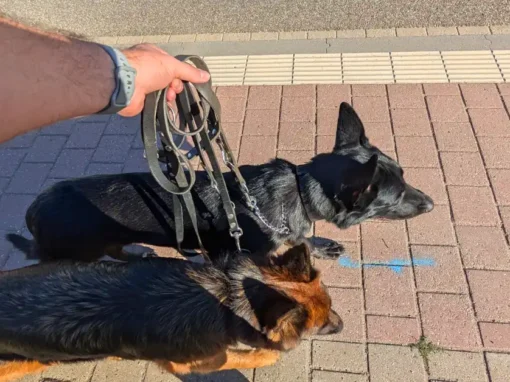
Her lovely heel position disappeared. She pulled. She looked at us when called, then found something else to investigate.
Every smell in the park seemed more interesting than we were.
Was it frustrating? Absolutely.
Was it sometimes funny? Also yes.
Especially the expression that looked like: “I heard you. I’m busy.”
That is our human interpretation, of course. Her behavior tells us she needs help succeeding around those distractions.
A Common Mistake: Giving Up on Training
We understand the temptation.
You ask for something simple. Your dog does something else. Eventually, you think: Why bother? None of this works anymore.
But adolescence is a reason to adjust training, not abandon it.
Keep practicing. Make the task achievable. Reward progress. Stay consistent—even when your dog looks at you as if you are the least interesting person on Earth.
Two other approaches can make things harder.
Escalating corrections out of frustration.
A harsher response does not automatically teach your dog what to do instead. It can increase stress, fear, or defensive behavior. Veterinary behavior specialists recommend reward-based methods and warn about the risks of aversive training.
Giving more freedom than your dog can currently handle.
If recall is unreliable, unrestricted off-leash time can give your dog repeated opportunities to run away from you. If jumping gets attention, it can become an increasingly practiced habit.
Use management to prevent problems while you teach the skills your dog needs.
Seven Ways to Help Your Teenage German Shepherd
Nearly thirty years with German Shepherds have taught us the value of patience, consistency, and realistic expectations.
These are the approaches we find useful.
1. Keep Training Sessions Short
An adolescent dog may struggle to concentrate in a particular setting.
A few successful minutes can be more useful than a long session that leaves both of you frustrated.
Try several short sessions rather than pushing through one difficult session. End while your dog is still engaged.
2. Make Success Possible Again
If your dog stops responding outside, do not assume the only solution is a more exciting treat.
First, check the setup.
Can you move farther from the distraction? Ask for an easier response? Improve your timing?
Reward the behavior you want as soon as it happens.
The reward needs to matter to your dog. Higher-value food can be useful, especially in a challenging setting, but it cannot compensate for a task that is currently too difficult.
Where possible, keep the reward out of sight until after the response. That helps distinguish rewarding a behavior from repeatedly showing food to persuade your dog to start.
3. Practice in Quieter Places
Training beside a busy dog park can be like trying to teach a teenager in the middle of a music festival.
Start somewhere your dog can concentrate.
Build distractions gradually rather than expecting the same performance everywhere immediately.
4. Lower the Difficulty When Needed
If a familiar skill becomes unreliable, return to an easier version.
That might mean a shorter stay, less distance, or fewer distractions.
You can still teach new things. Keep the steps small and give your dog plenty of chances to succeed.
Going back a step is part of training.
5. Create a Predictable Daily Rhythm
A recognizable pattern of activity, rest, meals, and companionship can help.
Your dog does not need every walk or meal to happen at precisely the same minute. What matters is that daily life feels reasonably predictable.
Include recovery time after exciting activities.
6. Balance Activity With Rest
German Shepherds need suitable physical exercise and mental engagement.
But more is not automatically better.
Combine appropriate exercise with sniffing, search games, short training sessions, and enough sleep.
A tired adolescent can become more restless or irritable rather than conveniently calm.
Zara often seems like a different dog after a satisfying sniffing session and a chance to rest.
7. Be Patient With Yourself
You will probably feel frustrated sometimes.
You may wonder whether you caused the problem or missed something important.
That does not mean you have failed.
Adolescence can be demanding. Progress may be uneven. Adjust your expectations, notice the small improvements, and seek support when you need it.
Time helps, but good habits and appropriate help matter too.
When Is It More Than Adolescence?
Do not automatically label every change “just a phase.”
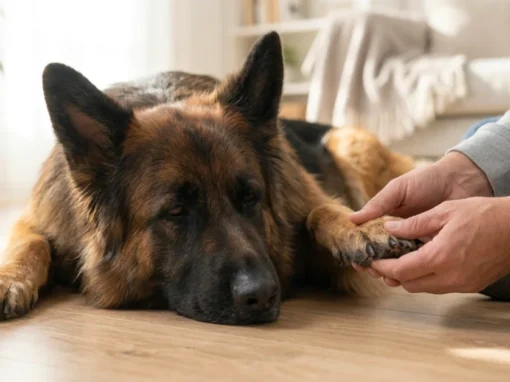
If behavior changes suddenly, or your dog finds being touched, moving, or getting up uncomfortable, contact your veterinarian.
Pain and illness can appear as reluctance, fear, irritability, or aggression.
Seek help from your veterinarian and a suitably qualified professional who uses reward-based methods if:
- Your dog shows aggression toward people or other animals.
- Fear or panic is severe.
- Problems persist or become worse.
- You feel unable to manage the situation safely.
Ask about qualifications, relevant experience, and training methods. A job title alone does not tell you enough.
Do not wait until adolescence is over to address aggression, panic, or safety concerns.
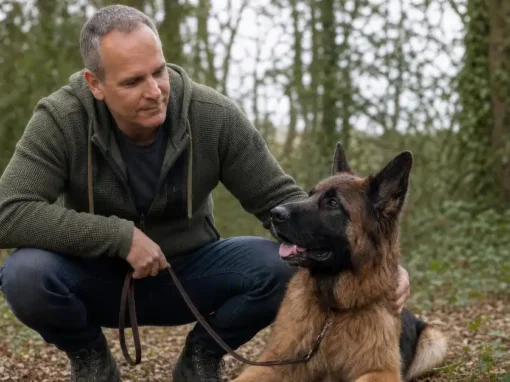
We are a family with extensive personal experience, not professional trainers. Individual problems sometimes need individual professional support.
Zara: Life With a Teenage Shepherd
We could hardly finish this article without returning to Zara.
She is our pedigreed long-haired German Shepherd, born in 2024 and bred in the northern Netherlands.
Before her first birthday, she made training look easy. She responded, walked beautifully, and stayed close.
Then the teenage chapter began.
Sometimes she walks as though she has decided we are following her route. When called, she looks at us, discovers something more interesting, and gets back to her investigation.
She has the energy of three dogs and, on certain days, the attention span of a goldfish.
But she is also affectionate, funny, and wonderfully loving.
The difficult moments are not the whole dog.
We can already see progress. Some days it is obvious. Other days we have to look a little harder.
You can follow Zara’s story through the social channels linked on our website.
German Shepherd Adolescence: The Key Points
- Adolescence often begins around six months, but timing varies.
- Sexual maturity and behavioral maturity are different.
- Large dogs may continue developing well into their second year and beyond.
- Familiar skills can become less reliable around distractions.
- Keep training, but adjust the difficulty.
- Use clear expectations, appropriate rewards, and sensible management.
- Balance exercise and mental activity with sufficient rest.
- Ask a veterinarian about sudden or concerning behavior changes.
- Get qualified help promptly for fear, aggression, or safety problems.
Does any of this sound familiar?
Tell us about your dog in the comments, and follow Silly Shepherds for more of everyday life with Zara.
🐕 Experience, with the facts kept in view
We write from nearly thirty years of living with German Shepherds. Personal experiences are presented as personal experiences. Behavioral information is checked against reliable sources. When something is uncertain, we say so.
P.S. Want to put these ideas into practice? Explore our book, The Language of the Shepherd.
Sources and Further Reading
- Cornell University College of Veterinary Medicine: The Teenage Years—Puppy-Proofing and Training Tips
- Asher and colleagues, 2020: Research on Adolescent Behavior in Dogs
- American Veterinary Society of Animal Behavior: Humane Dog Training Position Statement