ou brush him. You pay attention to his food. You take him out every day.
But when did you last look inside his mouth?
Or check his nails?
Nails, teeth, and ears often get attention only when something goes wrong.
A dog who keeps slipping on the kitchen floor. Breath that makes you lean away when he comes in for a kiss. A head that won’t stop shaking.
Routine checks can help you catch problems earlier.
In nearly 30 years with German Shepherds, we’ve seen the same mistakes come up again and again. Here’s what helps.
Nails: Listen, Then Look
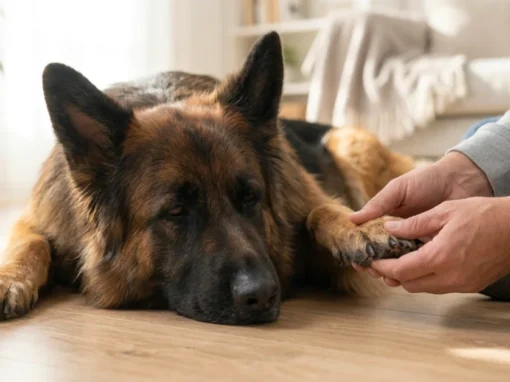
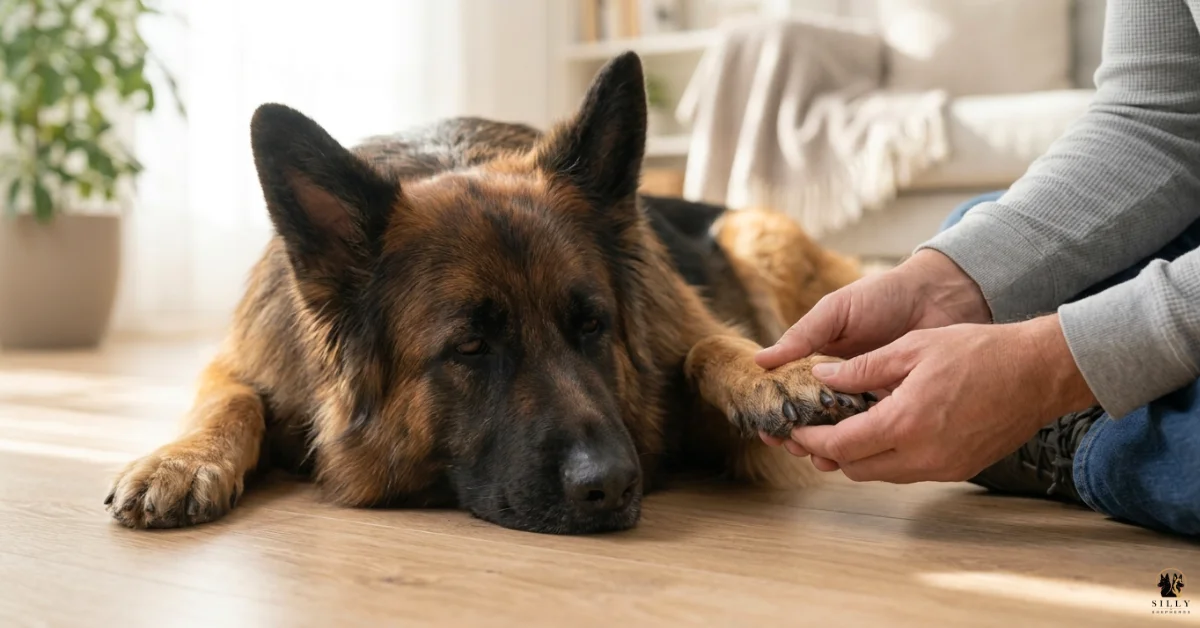
If you regularly hear your dog’s nails clicking against a hard floor, check their length.
The sound alone doesn’t tell the whole story. Look at how he stands. His nails should not push his toes upward or change their resting position.
Why It Matters
Overgrown nails can affect how your dog stands and walks. They can also snag, break, or curl into the skin.
Comfortable feet matter, especially for a large, active dog.
Don’t Forget the Dewclaws
Dewclaws are the little “thumbs” on the inside of the leg.
They usually receive little natural wear, so they can become overgrown even when the other nails look fine.
Some dogs also have rear dewclaws.
Include every nail in your checks.
How to Approach Nail Care
German Shepherd nails are often thick and black. That makes the quick—the sensitive tissue containing blood vessels and nerves—difficult to see.
Some owners find a nail grinder easier to control. Others prefer good-quality dog nail clippers.
Choose the method you can use accurately and your dog tolerates comfortably.
Check the nails weekly. Many dogs need trimming every two to four weeks, but growth and wear vary.
If the nails are very long, don’t try to shorten them dramatically in one session. The quick may have grown farther down the nail.
Remove small amounts and ask a veterinarian or experienced groomer to demonstrate if you’re unsure.
With a grinder:
- Use brief touches of about one or two seconds.
- Pause between touches to avoid heat buildup.
- Use light pressure.
- Keep fur away from the rotating head.
- Stop if your dog becomes uncomfortable.
Introduce the sound at a comfortable distance first. Then build gradually toward touching one nail.
You don’t have to finish all four feet at once.
If You Accidentally Cause Bleeding
Keep pet-safe styptic powder available.
Apply it according to the product instructions and hold steady pressure with clean gauze. Avoid repeatedly lifting the gauze to check.
If bleeding continues, the nail is badly damaged, or your dog remains painful, contact your veterinarian. Styptic powder is intended for minor nail bleeding, not a substitute for treating a significant injury. VCA Animal Hospitals
Start With Gentle Handling
Briefly touch your puppy’s paws, reward him, and gradually introduce the tools.
An adult German Shepherd who has never learned to feel comfortable with paw handling can suddenly become a very determined bundle of muscle when the clippers appear.
You know the look.
Apparently, another room urgently needs inspecting.
Common Mistakes
- Waiting until the nails are badly overgrown.
- Holding the dog down and pushing through fear.
- Checking only the front feet.
- Forgetting the dewclaws.
For long-coated Shepherds, also check between the toes for mats, grass seeds, and trapped debris.
Avoid cutting deeply between the toes. Ask a groomer to show you how to manage the hair safely.
Teeth: Problems Can Stay Hidden
Adult dogs usually have 42 teeth. Puppies have 28 baby teeth.
Teething generally begins around three to four months, with the adult teeth usually in place by about six to seven months.
Why It Matters
Dental disease is common, and dogs may continue eating despite oral pain.
Persistent bad breath, changes in chewing, or reluctance to eat deserve attention. Don’t automatically put them down to age or fussiness.
How to Build a Brushing Routine
Aim to brush daily. Brushing at least three times a week can help, but daily brushing is more effective at controlling plaque.
Use toothpaste made for dogs. Human toothpaste is unsuitable for swallowing and may contain harmful ingredients.
Build gradually:
- Let your dog taste a little dog toothpaste.
- Practice gently lifting his lip.
- Introduce brief contact with a soft dog toothbrush.
- Increase the brushing time as he becomes comfortable.
Focus on the outer surfaces of the teeth, including the back teeth.
Stop if you notice pain. Don’t try to brush an inflamed mouth without veterinary advice.
Brushing helps manage plaque, but it will not remove established tartar. VCA Animal Hospitals
What About Dental Chews?
Suitable dental products can support oral care. They do not replace brushing.
Avoid very hard chews such as bones, antlers, horns, and hooves, which can fracture teeth.
Choose an appropriate size, supervise chewing, and consider products carrying the Veterinary Oral Health Council—or VOHC—Seal of Acceptance.
That seal indicates that evidence has been reviewed supporting the product’s stated benefit for plaque and/or tartar control. Veterinary Oral Health Council
Signs That Something May Be Wrong
Watch for:
- Persistent bad breath.
- Yellow or brown buildup near the gumline.
- Red or swollen gums.
- Excessive drooling.
- Dropping food or chewing on one side.
- Pawing at the mouth.
Your veterinarian can assess whether treatment is needed.
A comprehensive dental examination and cleaning requires anesthesia so the team can examine and clean below the gumline and take dental X-rays when appropriate. Your veterinarian will assess your dog’s individual anesthetic needs and risks. AAHA
Common Mistakes
- Using human toothpaste.
- Waiting for obvious signs of pain.
- Assuming a chew stick replaces brushing.
- Trying to scrape tartar off at home.
Ears: Upright Doesn’t Mean Problem-Free
German Shepherds have upright ears.
That doesn’t protect them from ear infections, irritation, or foreign material in the ear canal.
Why It Matters
Ear problems can be painful. Repeated infections may also point to an underlying condition, including allergies.
Our article about atopic dermatitis covers part of that story.
What to Check
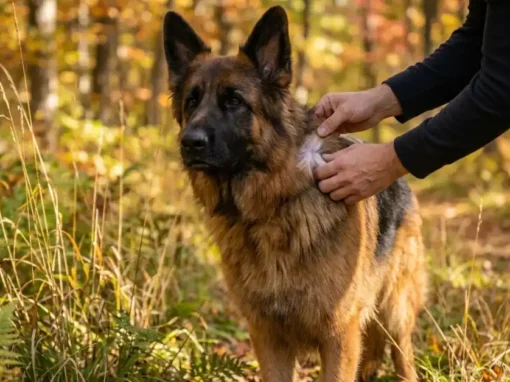
Look at both ears weekly.
A healthy ear should not have obvious redness, swelling, a strong unpleasant smell, or excessive discharge.
Normal skin color varies with pigmentation.
Watch for:
- Repeated head shaking or a head tilt.
- Scratching or rubbing the ears.
- An unpleasant odor.
- Dark, crumbly material or yellow-green discharge.
- Redness or unusual warmth.
- Whining or pulling away when the ear is touched.
Cleaning: Only When Appropriate
If an ear is painful, red, swollen, strongly smelling, or producing discharge, contact your veterinarian before cleaning it.
For routine cleaning, use a dog ear cleaner recommended by your veterinarian and follow its instructions.
Generally, the process involves applying the cleaner, gently massaging the base of the ear, allowing your dog to shake, and wiping away accessible debris with gauze or a cotton pad.
Do not insert cotton swabs into the ear canal.
Some dogs need regular cleaning as part of a veterinary care plan. Others rarely need it. Excessive cleaning can irritate the ear.
If cleaning hurts, stop. VCA Animal Hospitals
After Swimming
Gently dry the ear flap and visible entrance.
Don’t push a cloth or other object down the canal.
If your dog has recurring ear problems, ask your veterinarian about an appropriate swimming and cleaning routine.
During Grass-Seed Season
Sudden, intense head shaking after walking through long grass can indicate a foreign body.
Inspect only the visible outer ear and contact your veterinarian promptly.
Don’t try to retrieve something deep inside the canal yourself.
Common Mistakes
- Cleaning every week without checking whether it is needed.
- Using cotton swabs inside the canal.
- Waiting to see whether a painful, smelly ear improves on its own.
Choosing an Electric Nail Grinder
Look for a grinder designed for pets that can handle thick nails without stalling under light pressure.
Useful features include:
- Adjustable speeds.
- A suitable grinding head.
- A comfortable grip.
- Manageable noise and vibration.
- Clear instructions and readily available replacement parts.
A higher price doesn’t automatically mean a better fit for your dog.
The way you introduce and use the tool matters just as much.
A quiet machine can still frighten a dog who has never encountered it before. Begin gradually, reward comfortable behavior, and keep sessions short.
The Five-Minute Check
Choose a regular moment each week.
Sunday evening, perhaps, when your dog is already relaxing beside you.
Paws: Check nail length, dewclaws, and the skin between the toes.
Teeth: Gently lift the lip. Look at the gums and visible buildup, and notice any persistent odor.
Ears: Check for redness, discharge, odor, or discomfort.
Reward: Keep the experience gentle and predictable.
Build this routine from the beginning.
Five minutes is a useful reminder, not a deadline. If your dog is worried, split the checks into shorter sessions.
Stop if he shows pain or fear.
When Should You Contact the Vet?
Don’t wait when you notice:
- Bleeding that won’t stop.
- A torn, painful, or infected nail.
- A nail growing into the skin or paw pad.
- Persistent bad breath, inflamed gums, or a loose adult tooth.
- A painful ear, strong odor, or discharge.
- A sudden refusal to eat.
A routine check should help you recognize problems. It cannot diagnose them.
Small Jobs That Matter
Nails, teeth, and ears may not be the most exciting part of German Shepherd care.
But they help keep your dog comfortable on his feet, at mealtimes, and throughout everyday life.
That is worth a few minutes of our attention.
How does your Shepherd handle these routines?
Does he disappear at the sight of the nail grinder—or willingly show up for his toothbrush?
Share your tips and “oops” moments in the Silly Shepherds Facebook group. 🐾