Silly Shepherds · About a 10-minute read
You buy a vacuum cleaner.
You think one will do.
After a year with a German Shepherd, you own three.
Everyone who lives with this breed knows: the coat is a lifelong project. In summer. In winter. And during those major seasonal sheds, when you start wondering whether there will be any dog left once you finish brushing.
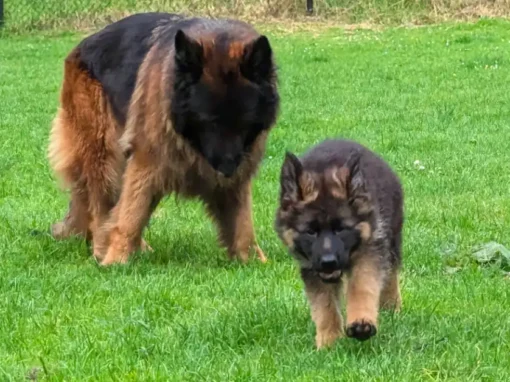
We have lived through it with Schadow and Troy’s shorter coats. With Ayla’s beautiful long coat. With Zara’s fuller-looking coat.
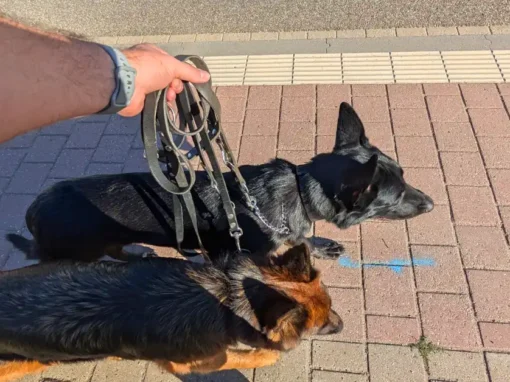
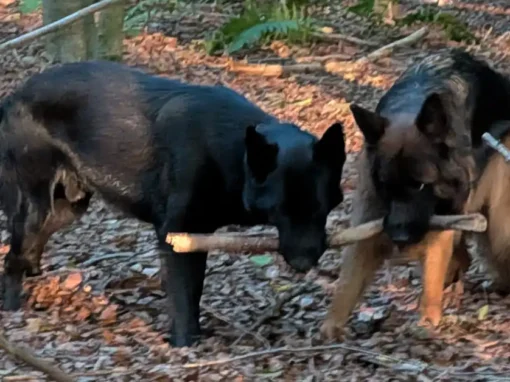
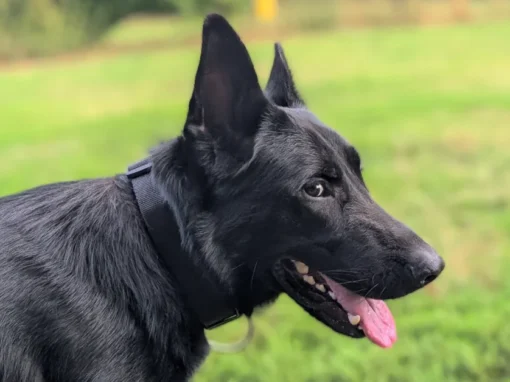
And now with Odin, our black, short-coated Shepherd, who arrived shedding as though he wanted to lose his entire winter coat in a week.
After nearly thirty years with this breed, we have learned what works for our dogs.
And what does not.
Stock Coat or Long Coat — There Is a Difference
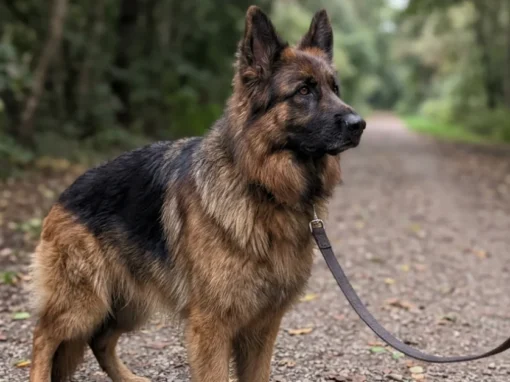
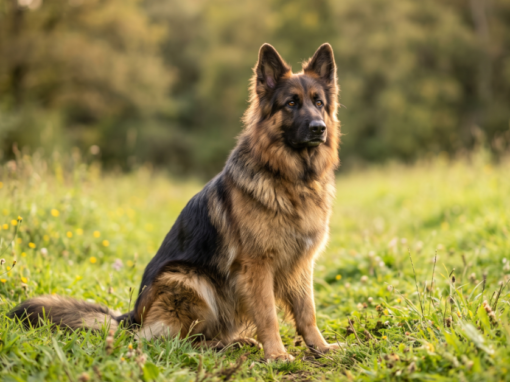
German Shepherds commonly have either a stock coat or a long stock coat.
Under the FCI breed standard, both coat varieties have an undercoat. Everyday terms include “short coat” and “long coat,” although breed standards and terminology differ between kennel clubs.
Stock Coat
Schadow, Troy, and Odin have this shorter coat type: a dense, firm outer coat over a softer undercoat.
That undercoat accounts for much of the fur you find during shedding season.
On the couch. On the floor.
Occasionally somewhere near your lunch.
Long Coat
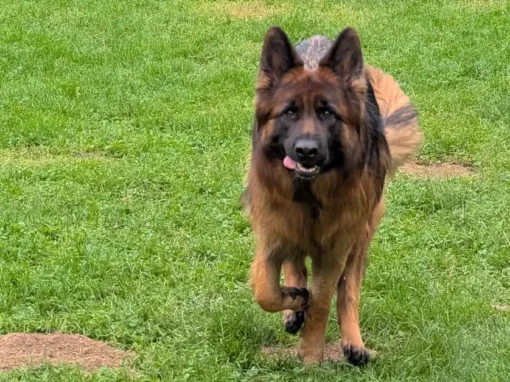
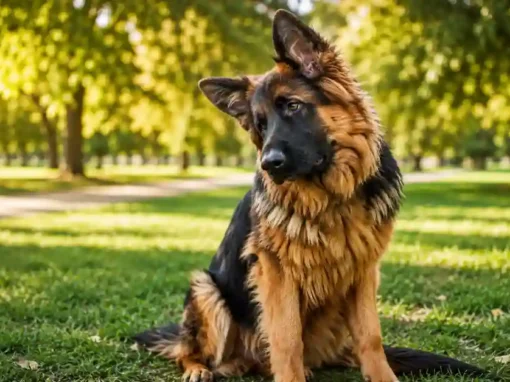
Ayla had a longer, softer outer coat.
Longer hair needs extra attention because it can tangle, particularly behind the ears, under the front legs, around the hindquarters, and near the tail.
With Ayla, carefully removing loose undercoat during her seasonal sheds made a noticeable difference to the amount of hair in our home afterward.
That was our experience with her.
It does not mean every long-coated Shepherd will shed less, or that one thorough grooming session replaces regular care.
Our Favorite Tool — The Undercoat Rake
There are dozens of brushes, combs, and grooming gloves.
We have tried quite a few.
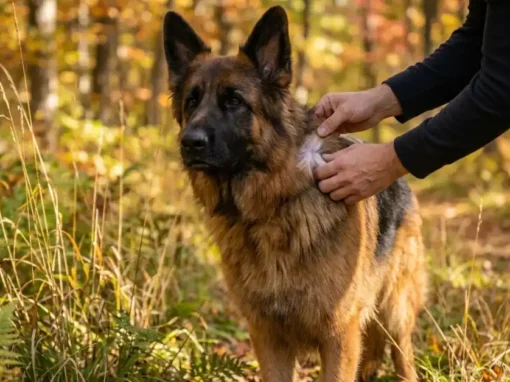
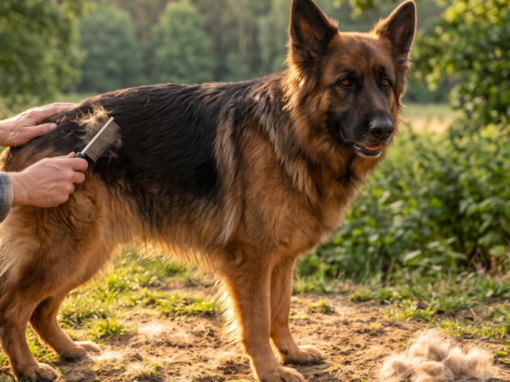
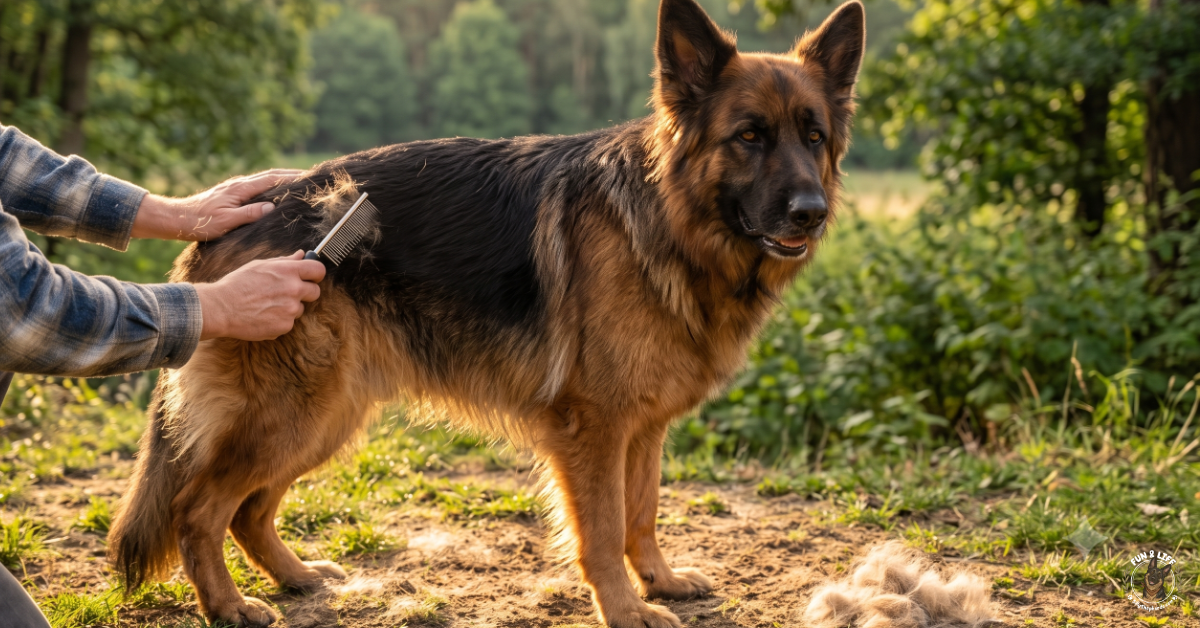
For our dogs, an undercoat rake has often been the most useful tool.
Choose one suited to the coat’s length and density. Different designs work differently; a tool that suits one dog may be uncomfortable for another.
The teeth should move through the coat without scraping the skin or dragging at hair that is still firmly attached.
Zara does not always enjoy grooming.
That means we pay attention to our technique and her comfort. Pulling is a reason to ease off, change tools, or check for a tangle.
Work gently in the direction the hair grows.
Do not keep going over the same patch indefinitely. Stop when little loose hair is coming out, or sooner if your dog becomes uncomfortable.
Short sessions work better for us than one marathon.
During a heavy shed, a few comfortable minutes at a time can achieve plenty.
Odin’s First Proper Grooming Session With Us
When we first groomed Odin, an enormous amount of loose undercoat came out.
His coat seemed overdue for attention.
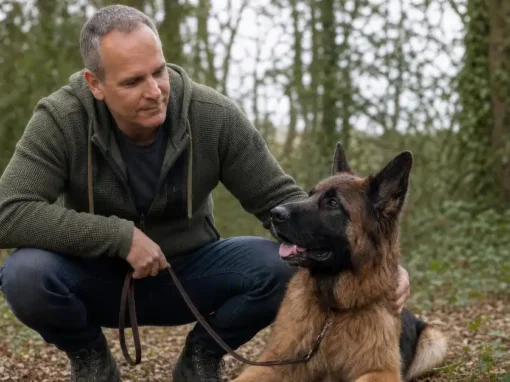
He stood calmly and let us work.
Maybe that was one of our first glimpses of the dog beneath that imposing exterior: a dog who was quite happy to have someone spend a little time with him.
The Big Shed — Often Twice a Year
German Shepherds shed throughout the year.
That is part of the deal.
Many also have heavier seasonal sheds, often around spring and fall. The timing and intensity vary with climate, daylight, indoor living, and the individual dog.
When that undercoat starts coming out in earnest, the vacuum cleaner earns its keep.
You find hair in your coffee. On your sandwich. In places your dog has never even been.
What Worked for Ayla
With Ayla, we waited until the undercoat was visibly loosening before doing more intensive removal.
We still checked her coat regularly between those sessions, especially behind the ears, under the front legs, around her hindquarters, and near her tail.
Waiting for a seasonal shed did not mean waiting for mats.
Once the loose tufts appeared, we gently removed them with a long-toothed comb, working through a little of the coat each day.
A couple of weeks of careful attention made a remarkable difference in our home.
She needed surprisingly few intensive grooming sessions over the year, alongside regular checks and lighter maintenance.
The useful lesson is to remove hair that is ready to come out.
Do not try to pull out healthy, firmly attached undercoat.
And if you find a tight mat, do not force a rake through it. Ask a groomer for help rather than pulling painfully or cutting close to the skin.
The Winter Coat Can Start Earlier Than You Expect
One year, we noticed Zara’s undercoat becoming fuller and darker in early August.
Summer here in the Netherlands was far from over.
Her coat appeared to be preparing for the next season already.
Daylight and temperature influence coat changes. Indoor heating and artificial lighting can also blur seasonal patterns, which helps explain why some dogs seem to shed all year.
August is not a universal timetable.
For readers in Australia or elsewhere in the Southern Hemisphere, the seasons run differently. Local conditions and your dog’s coat matter more than a date on the calendar.
For Zara, that change meant paying closer attention to loose hair and tangles.
Regular, gentle grooming helps us keep track of what is happening beneath the outer coat.
Bathing — When and How
A healthy German Shepherd does not need to be bathed simply because a particular number of days has passed.
Bath when your dog is genuinely dirty, needs cleaning after an outing, or when your veterinarian recommends it for a skin condition.
Persistent strong odor deserves investigation rather than repeated baths to cover it up.
Use a suitable dog shampoo and follow its instructions.
Harsh products or an unsuitable bathing routine can irritate the skin. On the other hand, dogs receiving treatment may need frequent baths with a prescribed product.
Follow your veterinarian’s plan in that situation.
What We Used for Odin
For one of Odin’s early baths, we chose Vetramil Derma Shampoo.
His coat looked dull, and we wanted a gentle cleaning routine.
That was our choice for him, rather than a recommendation that every Shepherd needs the same product. If your dog has irritated skin, ask your veterinarian which shampoo is appropriate.
Rinse thoroughly. Shampoo left in the coat can cause irritation.
Then dry carefully, especially where the undercoat is dense and around folds or areas where hair lies close together.
Check that the coat is drying near the skin, rather than feeling only the outer surface.
The Grooming Dryer — A Tool We Would Miss
One piece of equipment we now find particularly useful is a high-velocity dog dryer.
We use a Petchamp model with noise-reducing accessories.
It sounded excessive before we tried it.
Now we understand the appeal.
We use it outside near the stable after wet or muddy outings. It helps remove moisture, loose hair, and some debris before the dogs come inside.
It does not replace washing when dirt needs to be rinsed away, but it can make drying a dense coat much easier.
Introduce It Gradually
The sound and powerful airflow can be unsettling.
Start at a distance, on a low setting, with very short sessions. Let your dog hear the dryer without immediately directing air at them.
Reward calm behavior and build up gradually.
Do not assume every dog will learn to accept it quickly. Some need much more time, and some are better suited to another drying method.
Avoid hot air. Keep an appropriate distance from the skin and follow the manufacturer’s guidance.
Never direct the airflow into the eyes, nose, ear openings, or genital area.
Stop if your dog becomes frightened or uncomfortable.
Zara now accepts ours well.
With Odin, we take it one step at a time.
Nutrition and Coat Health — The Connection
Your dog’s coat can offer clues about nutrition and health.
Clues, though, are not a diagnosis.
Zara’s coat became fuller and shinier again after we stopped adding raw egg to her meals.
We noticed the timing.
We cannot say with certainty that the egg caused the earlier change.
Odin’s coat looked dull when he arrived. Earlier nutrition and limited grooming may have contributed, but we could not establish the cause from appearance alone.
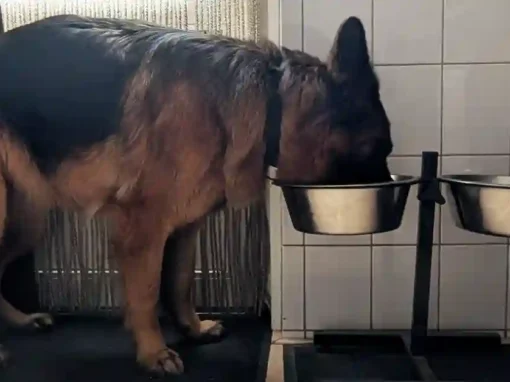
We moved him onto the salmon-based Purina Pro Plan Large Robust Adult Sensitive Skin food available in our market, which we also feed Zara.
Product names and formulations may differ between countries.
The main priorities are a complete, appropriate diet and monitoring how the dog does on it.
What About Omega-3 Oil?
We sometimes add a small amount of an omega-3 supplement.
These fatty acids can be useful in some skin-care plans, but more is not automatically better.
The appropriate amount depends on the dog, the product’s EPA and DHA content, and what their existing food already provides.
Ask your veterinarian about dosing, especially when treating skin problems or using a supplement long term.
Adding oil is not a substitute for diagnosing an underlying condition.
Give the Coat Time
We do not expect Odin’s coat to change overnight.
If nutrition and grooming are contributing factors, improvement may take weeks or months.
If the coat is not improving, or there are signs of itching, hair loss, or irritated skin, he needs an assessment rather than another supplement.
The Skin Problems We Will Never Forget
We cannot write about coat care without mentioning Ayla.
Both Schadow and Ayla experienced severe, persistent skin problems.
We cannot be certain that their conditions had the same cause.
With Ayla, it was relentless itching. Medication. Special food. Veterinary visits that became more frequent while relief became harder to achieve.
Eventually, the itching became pain.
She scratched and bit herself until she bled.
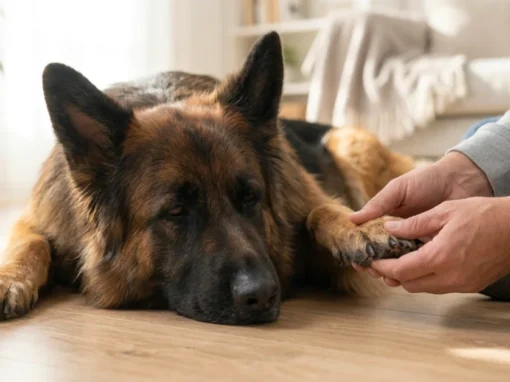
Severe itching, bald patches, sores, an unusual skin odor, or constant licking and biting are reasons to contact your veterinarian promptly.
Do not wait until the skin is badly damaged.
Ayla was nine.
Far too young.
In the end, we made the heartbreaking decision to let her go, with her suffering and quality of life at the center of that decision.
We share this because we know other owners are going through something similar.
Trying treatment after treatment.
Listening at night to hear whether their dog has finally settled.
If that is you, you are not alone.
Keep asking questions and working with your veterinarian. Persistent or difficult cases may benefit from referral to a veterinary dermatologist.
Ayla’s story deserves more than a footnote. We will return to it in a separate article about the skin problems we experienced and what we learned.
German Shepherd Coat Care — Practical Tips
- Choose grooming tools that suit your dog’s coat and use them gently.
- Groom stock coats regularly, with extra attention during heavy shedding.
- Check long coats for tangles throughout the year, especially behind the ears, under the front legs, and around the hindquarters.
- Remove loose undercoat without pulling at hair that is still firmly attached.
- Do not rely on a fixed seasonal calendar. Climate and indoor living affect shedding.
- Bathe according to your dog’s needs, using an appropriate dog shampoo.
- Follow veterinary instructions for medicated bathing.
- Rinse thoroughly and dry the dense undercoat carefully.
- Introduce a grooming dryer gradually and stop if your dog is uncomfortable.
- Discuss omega-3 supplements and dosing with your veterinarian.
- Investigate persistent itching, bald patches, sores, or unexplained coat changes.
- Give improvements time, while checking for problems that need treatment.
How do you care for your Shepherd’s coat? And do you recognize that moment when the seasonal shedding really begins? Tell us in the comments.
Follow us on YouTube, TikTok, and Instagram for more from everyday life with Zara and Odin.
Experience, With the Facts Kept in View
We write from nearly thirty years of living with German Shepherds. From Schadow’s stock coat to Ayla’s beautiful long coat, Zara’s returning shine, and Odin’s first grooming session with us. We identify personal experiences as personal experiences. We check grooming and health information against reliable sources. And when something is uncertain, we say so.