
Ticks on German Shepherds: How to Check, Remove, and Prevent Them
Silly Shepherds · About an 11-minute read
You’re home after a wonderful walk in the woods.
Your Shepherd is stretched out on the floor, with mud up to his belly and probably half a bush caught in his coat.
Somewhere beneath all that fur, there may be something you haven’t noticed yet.
A tick.
We spend plenty of time in woods and fields, so this is familiar territory. It isn’t pleasant, but it comes with having a dog who loves being outdoors.
Regular, thorough checks help you find ticks and remove them promptly.
We’re not veterinarians. This article helps you recognize risks and warning signs. Your veterinarian can advise you on prevention suited to your dog and your location.
Ticks: Small, but Worth Taking Seriously
Ticks are arachnids that attach to the skin and feed on blood.
You can encounter them in:
- Tall grass.
- Leaf litter.
- Shrubs.
- Woodland edges.
- Parks and trails.
- Gardens and yards.
They don’t jump or fly. Many wait on vegetation and climb aboard when a person or animal brushes past.
A German Shepherd pushing through bushes or investigating long grass gives them plenty of opportunities.
Tick activity depends on the species, climate, and region. Don’t assume cold weather means there is no risk.
Your local veterinarian can tell you when protection is needed where you live.
What Diseases Can Ticks Transmit?
Not every tick carries a pathogen. Not every exposed dog becomes ill.
However, ticks can transmit several diseases. Which ones matter most depends on where your dog lives and travels.
Lyme Disease
Many infected dogs show no obvious illness.
Dogs who do become sick may develop:
- Fever.
- Low energy.
- Reduced appetite.
- Painful or swollen joints.
- Stiffness.
- Lameness that appears to shift between legs.
Signs may appear months after exposure. Don’t rely on seeing the “bull’s-eye” rash associated with Lyme disease in people. vet.cornell.edu
Anaplasmosis and Ehrlichiosis
These infections can cause signs such as fever, tiredness, poor appetite, and sometimes lameness.
Some also affect blood cells or platelets, potentially causing bruising or bleeding.
Symptoms overlap with many other conditions. Diagnosis requires veterinary assessment.
Babesiosis
Babesiosis affects red blood cells and can cause serious illness.
Possible signs include:
- Fever.
- Marked weakness or lethargy.
- Pale or yellowish gums.
- Reduced appetite.
- Red or dark urine.
Contact your veterinarian promptly if you notice these signs. vet.cornell.edu
Regional Risks Matter
The United States, Canada, the UK, Australia, and other countries have different tick populations and disease risks.
Even within one country, the situation can vary considerably.
Before traveling with your dog, discuss the destination with your veterinarian. Your usual product may not cover the ticks or other parasites found there.
Australia: Tick Paralysis
In parts of Australia, especially along the eastern coast, paralysis ticks present an additional danger.
Their saliva can contain a toxin that causes progressive paralysis. Warning signs include:
- Wobbly or weak hind legs.
- A change in bark.
- Gagging, retching, or vomiting.
- Difficulty breathing.
Suspected tick paralysis is a veterinary emergency. Removing the tick does not replace treatment, and signs can worsen afterward.
If you find a tick in a paralysis-tick region, seek veterinary advice promptly—even if your dog initially seems well. Merck Veterinary Manual
How Quickly Can a Tick Transmit Disease?
It depends on the tick and the pathogen.
The claim that a tick cannot transmit anything during the first 24 hours is too absolute.
Remove attached ticks promptly. Earlier removal can reduce risk, but there is no universal “safe window” covering every tick-borne disease.
Protection involves both:
- An appropriate prevention plan.
- Regular checks of the skin and coat.
Using a preventive does not make checking unnecessary.
The Tick Check After a Walk
Check your Shepherd after walks through grass, bushes, woodland, or other tick habitat.
With a thick undercoat, looking alone isn’t enough.
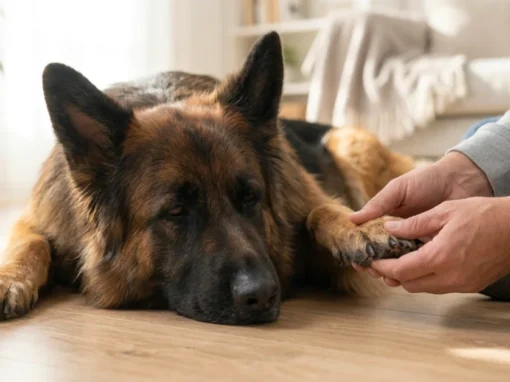
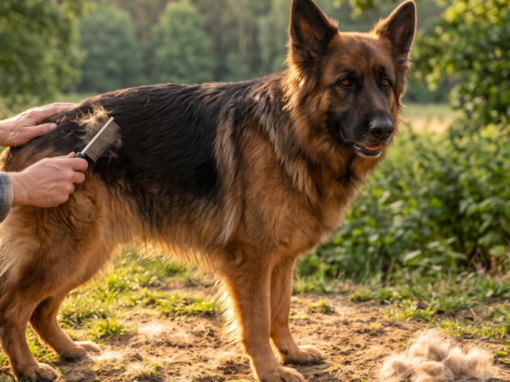
Work your fingers through the fur, feeling down to the skin. Follow the same sequence each time so you’re less likely to miss an area.
Pay particular attention to:
- Around and behind the ears.
- Around the eyelids and lips.
- Under the jaw.
- The neck and chest.
- Beneath the collar or harness.
- Under the front legs.
- The belly and groin.
- Around the tail.
- Between the toes and around the paw pads.
Small ticks can be difficult to spot. After feeding, they may swell into a noticeable rounded lump.
Look carefully before attempting removal.
Nipples, skin tags, scabs, and small growths can be mistaken for ticks. CDC
Check Yourself and the Children Too
You don’t catch Lyme disease directly from a dog who has it.
But an unattached tick can travel indoors on your dog and later attach to a person.
After time in tick habitat, check people as well as pets. Inspect clothing and consider where your dog has rested.
Finding a tick on your dog is a reminder that everyone shared the same environment.
How to Remove a Tick
Use clean, fine-tipped tweezers or a suitable tick-removal tool.
With fine-tipped tweezers:
- Part the fur so you can see the attachment point.
- Grasp the tick as close to the skin as possible, around the mouthparts rather than the swollen body.
- Pull steadily upward without twisting or jerking.
For a purpose-designed tick hook or other device, follow its instructions. Some tools use a different removal motion.
Avoid:
- Squeezing the tick’s body.
- Burning it.
- Puncturing it.
- Applying oil, alcohol, petroleum jelly, nail polish, or essential oils before removal.
Afterward, clean the bite site with a pet-safe cleanser and wash your hands.
Record the date and location of the bite. A photo can be useful.
Check the rest of your dog for more ticks.
Don’t crush the removed tick with bare fingers. Seal it in tape or a closed container or bag for disposal. Merck Veterinary Manual
If Mouthparts Remain
Small pieces can sometimes remain in the skin.
Don’t dig into the skin trying to retrieve them. Ask your veterinarian if you are unsure, particularly near the eye or another sensitive area.
Monitor for increasing redness, swelling, warmth, pain, or discharge.
If those develop, contact your veterinarian.
After a Tick Bite: What Should You Watch For?
Most tick bites do not result in obvious illness. Still, keep the date in mind and watch for changes over the following days, weeks, and months.
Possible warning signs include:
- Fever or unusual tiredness.
- Reduced appetite.
- Stiffness or painful movement.
- Lameness.
- Swollen joints.
- Pale or yellowish gums.
- Dark or red urine.
- Unexplained bruising or bleeding.
- A dog who is clearly not himself.
Seek emergency care for collapse, breathing difficulty, seizures, severe weakness, or rapid deterioration.
Tell the veterinarian about the tick exposure, even if it happened weeks earlier. Mention travel history too.
Don’t delay seeking care because you no longer have the tick. Your veterinarian can decide whether identification, blood tests, or other investigations would help.
Prevention: Choose a Plan for Your Dog
Options may include:
- Oral medications.
- Spot-on treatments.
- Tick collars.
- Other approved products for particular situations.
Products differ in active ingredients, duration, tick coverage, and suitability.
Some kill ticks after attachment. Certain topical products also have repellent effects.
No product guarantees that you will never find a tick.
We use flea and tick prevention ourselves. The important question is which plan provides appropriate protection for the dog’s actual exposure.
Discuss:
- Where you live and walk.
- Local tick species and diseases.
- Travel plans.
- Your dog’s age, weight, and health.
- Previous reactions.
- Swimming and bathing.
- Other animals in the household.
In the United States, the Companion Animal Parasite Council recommends year-round tick prevention. Local veterinary advice remains important for choosing suitable protection wherever you live. Ticks
Follow the prescribed dose and schedule. Don’t reduce doses, split products, extend intervals, or combine treatments without professional advice.
What About a Lyme Vaccine?
Where available and appropriate, your veterinarian may discuss Lyme vaccination based on your dog’s exposure risk.
It does not replace tick prevention or regular checks. Lyme Disease
Cats in the House: Read the Label Carefully
Some dog tick products contain ingredients that are highly toxic to cats, including permethrin.
Exposure can happen if a cat grooms or has close contact with a recently treated dog.
Never apply a dog-only product to a cat.
Tell your veterinarian that cats live in your home, and follow the product’s instructions about keeping animals separated after treatment.
If your cat is exposed to a permethrin-containing dog product, contact a veterinarian immediately. Don’t wait for symptoms. vmd.defra.gov.uk
Home Remedies and Essential Oils
Don’t rely on garlic, amber necklaces, coconut oil, or essential oils as substitutes for proven tick prevention.
Garlic can be toxic to dogs and cats.
Essential oils, including concentrated tea tree oil, can also cause poisoning.
“Natural” does not automatically mean safe.
Choose a product evaluated for the intended use and suitable for your dog’s species, age, and weight. Merck Veterinary Manual
Possible Reactions to Tick Products
Approved products provide important protection, but adverse reactions can occur.
Watch for:
- Vomiting or diarrhea.
- Marked lethargy.
- Significant itching or skin irritation.
- Tremors.
- Unsteady movement.
- Seizures.
- Facial swelling.
- Breathing difficulty.
The FDA has specifically advised owners about potential neurological reactions associated with the isoxazoline class of flea and tick medications. Discuss any seizure history or previous reaction with your veterinarian when choosing a product. FDA
If you suspect a reaction, contact your veterinarian promptly. Seek emergency care for severe signs.
Keep the packaging so you can identify the product, dose, and active ingredient.
When Should You Contact the Vet?
Ask for help when:
- You cannot remove a tick safely.
- The bite site becomes increasingly inflamed or painful.
- Your dog develops concerning symptoms after exposure.
- You suspect a reaction to a preventive.
- You find a tick in an area where tick paralysis is a concern.
For collapse, severe breathing difficulty, seizures, very pale gums, or rapid deterioration, seek emergency veterinary care.
What to Remember
- Check your Shepherd thoroughly after time in tick habitat.
- Feel down to the skin beneath that thick coat.
- Remove attached ticks promptly using an appropriate tool.
- Follow the instructions for your removal device.
- Don’t apply chemicals or home remedies before removal.
- Prompt removal reduces risk but does not guarantee protection.
- Follow a prevention plan suited to your dog and your region.
- Never use a dog-only tick product on a cat.
- Take changes in your dog’s health seriously.
- Discuss travel before departure.
We’ll cover fleas and worms in another article.
How do you check your Shepherd after a walk?
Share your experiences in the Silly Shepherds Facebook group.
Follow us on YouTube, TikTok, and Instagram for more from everyday life with Zara and Odin.

🐕 Experience, With the Facts in Mind
We write from nearly 30 years of life with German Shepherds. We’re not veterinarians. Our experiences are personal; medical guidance comes from veterinary and public-health sources. Choose your dog’s preventive product and schedule with your veterinarian.
Further Reading
- CDC — Preventing Ticks on Pets
- Merck Veterinary Manual — Tick Removal
- Companion Animal Parasite Council — Ticks
- FDA — Safe Use of Flea and Tick Products
- University of Sydney Veterinary Hospital — Ticks