Silly Shepherds · About a 9-minute read
Can I leave him alone?
The honest answer: many dogs can learn to stay home comfortably. But it takes preparation, and some need more support than others.
Destruction, barking, or bathroom accidents while you’re away can have different causes.
They don’t all call for the same solution.
Possible Causes—and Why the Difference Matters
People often assume the problem is simply how long the dog was left alone.
Sometimes the routine does need adjusting. Boredom, unmet exercise needs, or too few bathroom breaks can contribute.
But other possibilities include separation anxiety, fear of noises, frustration with a door or crate, incomplete housetraining, pain, medical conditions, or reacting to people and animals outside.
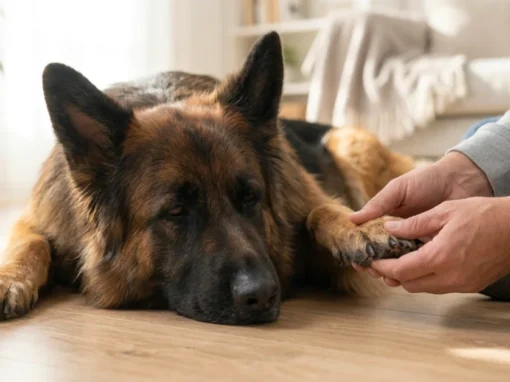
With separation anxiety, distress may begin while you’re getting ready to leave—or within minutes of your departure.
A dog with unused energy may become restless or chew things. But destruction does not automatically mean he needed a longer walk.
A camera can help you see what happens before the behavior begins. That often tells you more than the damage itself.
How Long Can a German Shepherd Stay Home Alone?
There is no breed-specific number that works for every German Shepherd.
Dogs Trust and the RSPCA recommend generally limiting a comfortable adult dog’s time alone to about four hours. Puppies, dogs with medical needs, and dogs still learning to be alone may need much shorter periods. Dogs Trust
Four hours is not a training target you have to reach. If your dog becomes distressed after two minutes, that is where your work begins.
For a full workday away, arrange suitable company, care, and bathroom breaks. A dog’s ability to hold his bladder does not tell you whether he is comfortable being alone.
Give Your Dog a Calm Start
Before leaving, give your dog an opportunity to move, sniff, and go to the bathroom.
Choose activity that suits his age, health, and fitness. Allow time afterward for him to settle.
Intense running or wild play immediately before departure can leave a dog excited rather than relaxed.
Exercise and mental enrichment can support a good routine. They do not, by themselves, treat separation anxiety.
A dog who is afraid of being alone needs a gradual plan that helps him feel comfortable with your absence.
Dogs Experience Time Differently
Your dog doesn’t check a clock the way you do.
That does not mean ten minutes and three hours feel identical to him.
Routines, daylight, sounds, hunger, thirst, and bathroom needs all change as time passes. A longer absence can also produce a different response from a short one.
Build both the act of leaving and the duration.
Keep departures and arrivals calm and predictable. You can greet your dog gently when you return—there is no need to act as though he doesn’t exist.
Your behavior may influence how exciting those moments become. A calm goodbye cannot guarantee that a worried dog will feel safe.
Build Alone Time at Your Dog’s Pace
A dog who has never been alone cannot be expected to jump straight from constant company to several hours.
Start as small as necessary.
That might mean a few seconds on the other side of a door.
Increase the duration only while your dog remains comfortable. Don’t automatically move from five minutes to ten, then thirty.
Let his behavior guide the next step.
During practice, aim to return before distress begins. Repeatedly leaving a dog beyond what he can cope with may make the problem worse. merckvetmanual.com
If he becomes unsettled, make the next session easier.
Watch for:
- Panting when it isn’t hot.
- Repeated pacing or changing positions.
- Whining, barking, or howling.
- Excessive drooling or lip licking.
- Refusing food when you leave.
- Scratching or biting doors and frames.
- Urinating or defecating indoors.
- Escape attempts or self-injury.
- Prolonged staring at the door.
- Being unable to settle or sleep.
Never punish damage or bathroom accidents when you return. It will not help your dog learn to be comfortable alone and may add to his anxiety.
Arrange care during training so he does not repeatedly have to endure absences he cannot manage.
The Crate—a Possible Tool
A crate can provide a comfortable resting place when it has been introduced positively and the dog genuinely relaxes inside.
It does not automatically teach a puppy to accept being alone, and it cannot replace bathroom breaks or companionship.
The door does not always need to be closed.
A dog who panics, bites the bars, or tries to escape should not be left alone in a closed crate. He could seriously injure himself. Confinement can worsen distress for some dogs. AAHA
Depending on the dog, a puppy pen, dog-proof room, or larger safe area may work better.
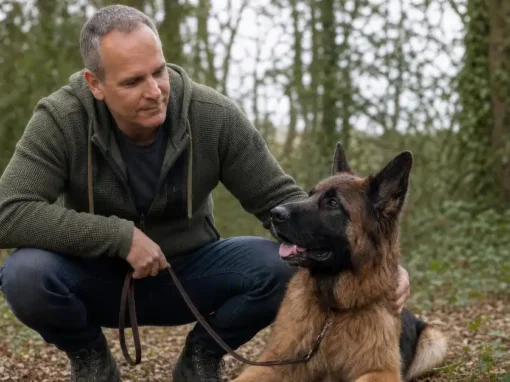
Odin spent a lot of time in a crate at his previous home.
We deliberately chose not to continue that arrangement automatically. We want to see where he actually feels most relaxed.
The Camera—One of the Most Useful Tools We Have
Thirty years ago, you often had little idea what your dog did while you were out.
You left. You returned. You saw whatever had happened.
Now we can watch.
Use a camera primarily to observe:
- How soon signs of distress begin.
- Whether your dog eats.
- Whether he keeps watching doors or windows.
- Whether he pants, drools, trembles, or whines.
- How long it takes him to lie down.
- Whether he actually sleeps comfortably.
Pay particular attention to the beginning of the absence. Recording the first 30 to 60 minutes can be useful, although some problems appear later.
Video can also help a veterinarian or behavior professional assess what is happening.
Test any speaker function while you are home.
Some dogs may settle when they hear your voice. Others become more unsettled because they can hear you but cannot find you.
If it increases searching or agitation, leave it switched off.
Talking through a camera is not a solution for panic. If possible, end the absence, shorten the next practice session, and seek help when distress is significant.
Quiet Music May Help Some Dogs
Soft, predictable background sound helps some dogs settle. Others barely respond.
Use the camera to see what happens with your dog.
Keep the volume low. Music can support a comfortable environment, but it cannot replace gradual alone-time training.
A Visit or Walk During the Day
A trusted dog walker, sitter, neighbor, or friend can be a valuable part of your routine.
A visit gives your dog company and a chance to go outside.
For a dog who is comfortable alone but needs a break, that may be helpful.
For a dog with separation anxiety, a brief visit may not be enough. He may need someone to stay with him while you work on a treatment plan.
I have the advantage of working from home as a self-employed business owner. Our dogs are rarely without company.
That makes practicing short periods apart especially important.
When we do need to leave them, we don’t want it to be their first experience of being alone.
Every Dog Is Different
There is no universal recipe.
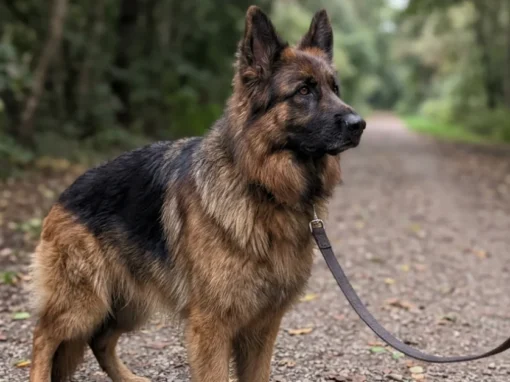
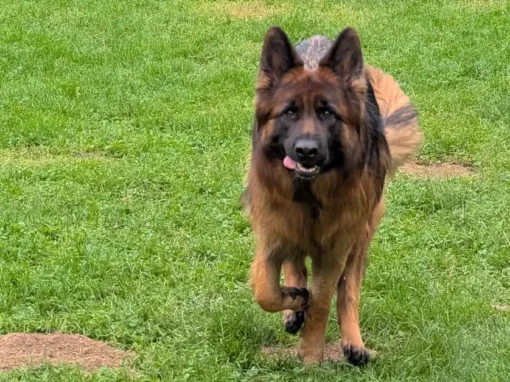
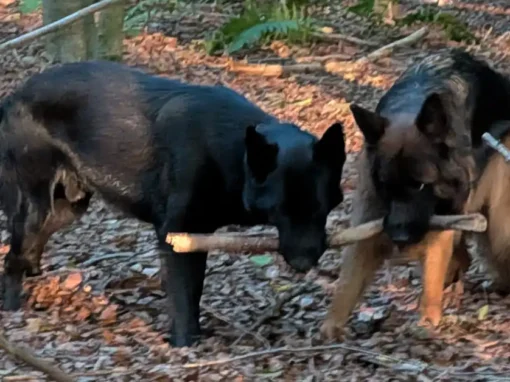
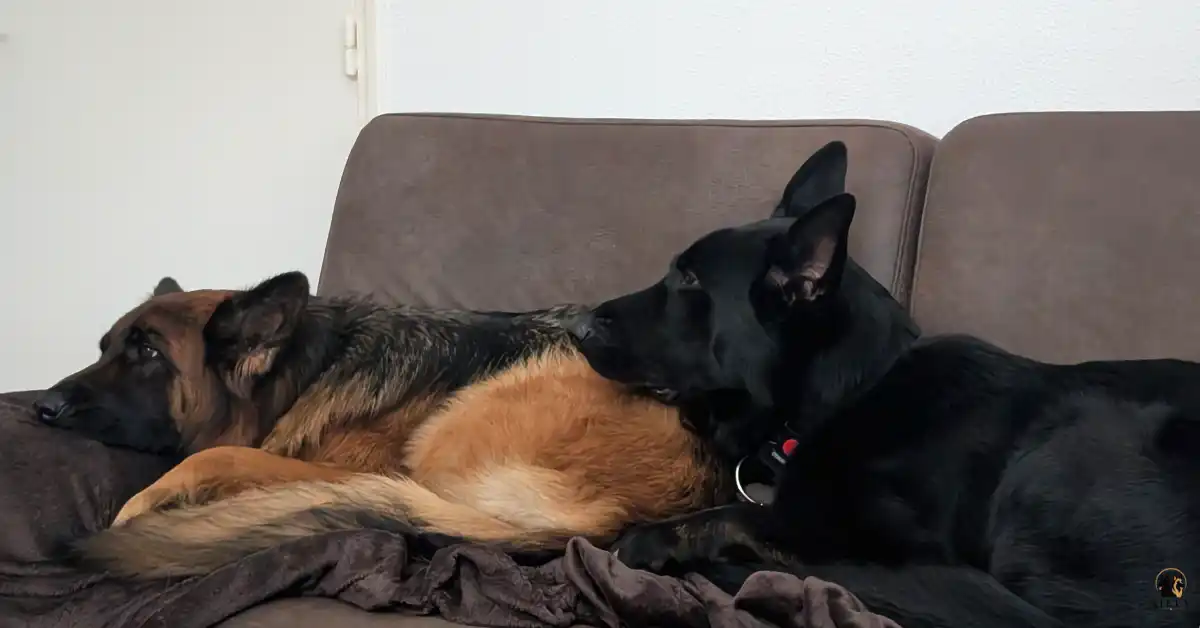
Zara has generally had little difficulty with short periods alone. She lies down, sleeps, and waits.
Odin is different. More watchful. More focused on his surroundings.
For him, we need more preparation and smaller steps.
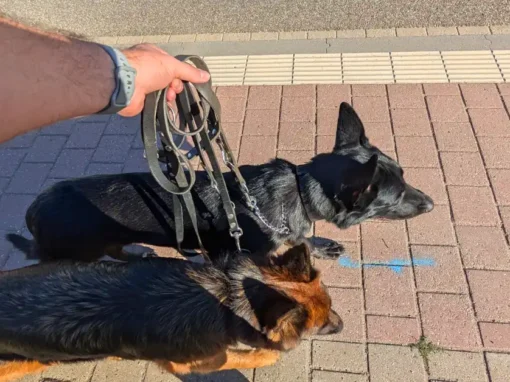
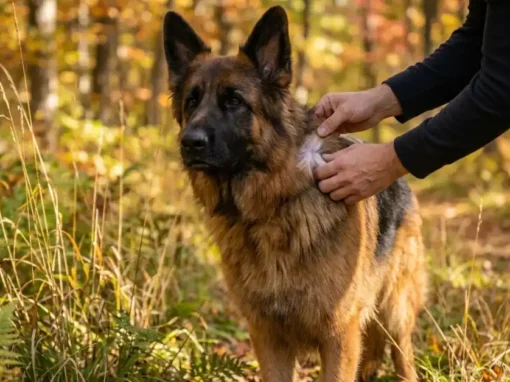
Schadow always wanted to be near her family. Ayla was more independent.
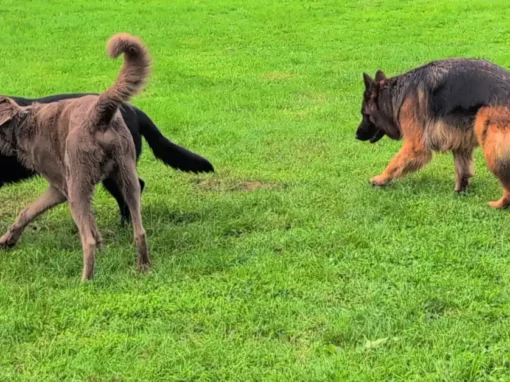
Same breed. Different needs.
Watch your own dog and adapt.
Before You Leave
Make sure your dog has fresh water and a comfortable, well-ventilated space.
Put away food, trash, medication, and toxic plants. Secure outside doors and windows, and prevent access to electrical cords.
Check for anything that could catch a collar or harness.
Give him an opportunity to go to the bathroom shortly before departure.
Only leave food toys or chew items you already know he can use safely without supervision. Your departure is not the time to test a new toy.
A snuffle mat is not suitable for every dog to use alone. Some dogs tear the fabric apart and swallow it.
When Do You Need Professional Help?
Contact your veterinarian if your dog:
- Panics or attempts to escape.
- Injures himself.
- Drools heavily or refuses food while alone.
- Barks or howls for prolonged periods.
- Suddenly struggles with being alone after previously coping well.
Pain and medical problems may contribute and need to be assessed.
Ask for help from a qualified behavior professional when appropriate.
For separation anxiety, medication may sometimes be part of treatment alongside a behavioral plan. That is a veterinary decision, and it does not mean you have failed your dog. Merck Veterinary Manual
What Technology Has Changed
We now have cameras, speakers, automatic feeders, smart doorbells, and apps.
They can help us understand what happens when we leave.
But watching remotely cannot replace company, bathroom breaks, appropriate care, or treatment for anxiety.
The foundations remain familiar: meeting your dog’s needs, providing a comfortable environment, and gradually practicing manageable periods apart.
Technology helps us see whether those foundations are working.
More to read:
- Feeding Your German Shepherd — Kibble, BARF, or Fresh?
- German Shepherds in Summer — Keeping Your Dog Cool and Healthy
- Odin Week 5 — The Week a Strange Dog Leaped Into My Arms
Leaving Your German Shepherd Home Alone: What to Remember
- Consider fear, frustration, and medical causes as well as exercise needs.
- Plan the length of an absence around your individual dog.
- Build alone time gradually, using behavior rather than a fixed schedule.
- Choose a safe space where your dog genuinely relaxes.
- Use a camera to recognize distress early.
- Arrange suitable care when you need to be away longer than your dog can manage.
- Seek professional help for panic, self-injury, or persistent distress.
Do you leave your German Shepherd home alone? What has helped your dog feel comfortable?
Share your experience in the comments.
Follow us on YouTube, TikTok, and Instagram for more from everyday life with Zara and Odin.
🐕 Experience, With the Facts in Mind
We work from home, so our dogs are rarely without company. We still practice time apart. These are our experiences, alongside practical behavioral guidance. Every dog is different—and when something is uncertain, we say so.