
Atopic Dermatitis in German Shepherds — The Story We Wish We Didn’t Have to Tell
Silly Shepherds · About a 10-minute read
Some stories are hard to write.
This is one of them.
Years apart, we lost two Shepherds whose suffering involved atopic dermatitis.
Schadow.
And Ayla.
Both lived with a chronic skin condition that caused severe itching. Eventually, they scratched and bit themselves until they bled.
Both times, saying goodbye was among the hardest decisions we have ever made.
We are writing this for the people going through something similar right now.
The people making another veterinary appointment. Trying another treatment. Listening at night to hear whether their dog has finally settled.
If that is you, you are not alone.
And what happened to Schadow and Ayla is not the only possible outcome. Many dogs with atopic dermatitis maintain a good quality of life for years with an individualized treatment plan.
What Is Atopic Dermatitis in German Shepherds?
Atopic dermatitis is a chronic inflammatory skin disease with an inherited component.
The skin barrier, immune response, sensitivity to environmental allergens, and changes in the skin’s normal microorganisms can all contribute.
Possible allergens include pollen, molds, and house dust mites.
Itching is usually the most noticeable symptom.
Estimates of how common the condition is vary. German Shepherds appear among the breeds reported to have an increased predisposition, although risk differs between populations and environments.
Genetics matters, but so does the environment.
Atopic dermatitis generally requires long-term management rather than a one-time cure.
For many dogs, symptoms can be kept under good control.
How Do You Recognize It?
Sometimes it starts so gradually that you barely notice.
Your dog licks a little more.
Their paws. Their belly.
Perhaps they start scratching around their ears.
You think: something is itchy.
Fleas, maybe. Something they ate.
You take a closer look and do not see much.
But the licking continues.
Then the scratching becomes harder to ignore.
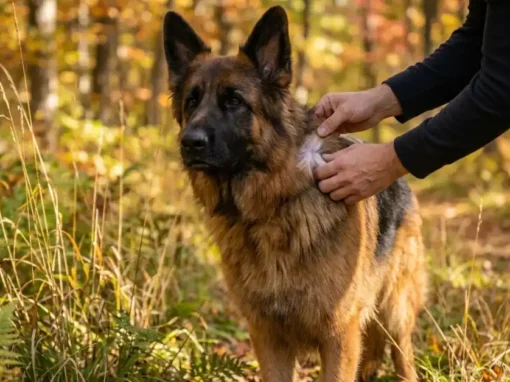
Commonly affected areas include the face, ears, paws, spaces between the toes, armpits, and groin.
Recurring ear inflammation or infections can also be an important clue. For some dogs, ear problems are among the earliest or most prominent signs.
Itching Alone Does Not Diagnose Atopy
Your veterinarian needs to investigate other possible causes or contributing problems, including:
- Fleas and flea allergy
- Mites
- Bacterial or yeast infections
- Food allergy
Diagnosis involves the history, examination findings, and a process of ruling out other explanations.
There is no single blood or skin test that independently proves a dog has atopic dermatitis.
Allergy testing is mainly used after a clinical diagnosis to help select allergens for possible immunotherapy.
With Schadow, the beginning looked just like that gradual pattern.
More licking.
More scratching.
Weeks passed before we understood that it was not a temporary irritation.
With Ayla, we recognized the pattern sooner.
We had seen it before.
Once the skin becomes damaged, secondary infections can add to the discomfort. More itching leads to more scratching, licking, and biting.
The cycle can become difficult to break.
From Licking to Scratching and Biting — Our Experience
What caught us off guard was how severe it could become.
At first, there were manageable periods.
We treated the skin. Gave medication. Had good stretches and harder stretches.
Later, in our dogs’ cases, the itching became much more intense.
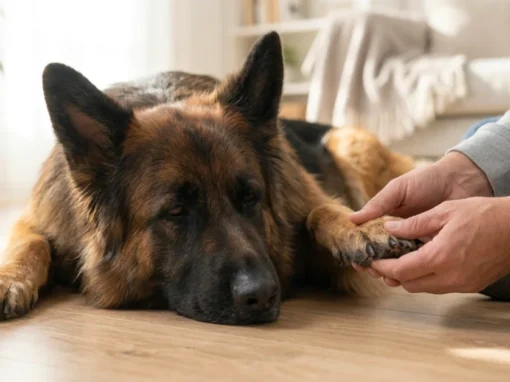
They scratched, chewed, and bit at their skin.
Sometimes until it was open and bleeding.
That progression is part of our story. It is not inevitable for every dog with atopic dermatitis.
Ayla’s Treatment
Initially, Ayla’s injections gave her relief for longer periods.
Later, her symptoms returned sooner.
We worked with our veterinarian to adjust treatment. Eventually, we could no longer keep her itching and pain adequately controlled.
The deciding factor was her overall quality of life.
Not simply how often she needed an injection.
If a treatment seems to work for less time, or stops providing enough relief, contact your veterinarian. Do not change medication doses or intervals yourself.
Schadow’s Decline
With Schadow, the final deterioration happened more quickly.
She was around twelve, an age when other health problems can also complicate the picture.
About a month passed between the first severe symptoms in that final period and our decision to say goodbye.
It was devastating.
The Age We Cannot Forget
Ayla was nine.
Old enough for other health issues to become relevant.
Still far too young to us.
Her age alone did not determine the decision.
Our veterinarian considered her symptoms, remaining treatment options, and quality of life.
Sometimes I tell myself that every year beyond nine is a bonus year.
That is my way of coping.
It is not a medical statement about how long a German Shepherd should live.
The second time you go through something like this, you know more about what may lie ahead.
That brings a different kind of grief.
What Can You Do as an Owner?
There is a great deal you can do to support comfort and quality of life.
Treatment is usually individualized and may combine itch-relieving medication, treatment of infections, skin care, parasite prevention, and management of known triggers.
Allergen-specific immunotherapy may also be an option. It aims to change the immune response to selected allergens, although it does not work equally well for every dog.
For severe or difficult-to-control symptoms, ask about referral to a veterinary dermatologist.
Seek Help Early
Do not wait until your dog has scratched their skin raw.
Persistent licking, scratching, ear problems, or interrupted sleep deserve attention.
Early assessment can help identify the cause and address problems before further damage develops.
Understand What Food Can and Cannot Do
Complete, balanced nutrition supports general skin health.
It does not cure atopic dermatitis.
If food allergy is also suspected, your veterinarian may recommend a strict elimination diet followed by a controlled food challenge.
That process needs careful guidance. Treats, flavored medication, and other extras may interfere with the trial.
We chose a salmon-based Purina Pro Plan Sensitive Skin food and omega-3 oil as part of our own approach to supporting skin health.
That is a personal feeding choice, not a treatment suitable for every dog with atopy.
A food marketed for “sensitive skin” is not automatically appropriate for a diagnostic elimination diet.
Keep Grooming Gentle
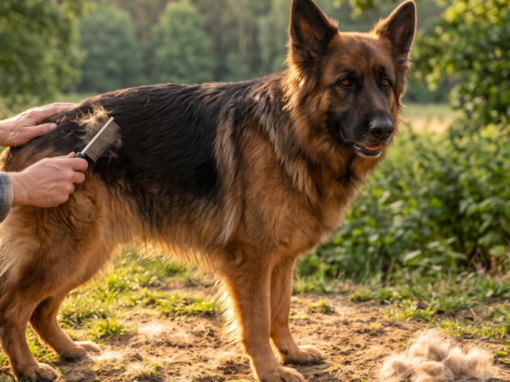
Keep the coat clean and free of tangles.
Brush carefully. Inflamed skin can be painful.
Do not automatically shave a German Shepherd’s double coat. Ask your veterinarian if clipping is needed for a particular medical reason.
Use shampoos and other skin products that fit the treatment plan. Follow the recommended contact time and frequency.
Stay Consistent With Flea Prevention
Even a small number of fleas can make an itchy dog much more uncomfortable.
Follow your veterinarian’s advice for suitable prevention and treatment.
Other animals in the household may need treatment too. If there is an infestation, the environment also needs attention.
Make Room for Rest
Stress and restlessness may make scratching or licking harder to manage for some dogs.
A calm, predictable routine can help your dog settle.
It supports care. It does not replace treatment for the itching itself.
Keep Reviewing Quality of Life
This is the hardest part.
Ask whether the current plan is giving your dog enough relief to sleep, eat, interact, and enjoy their usual activities.
A flare-up may call for reassessment or a different treatment plan.
Persistent suffering despite treatment requires a wider conversation with your veterinarian.
The Decision to Say Goodbye
We do not want to make this sound simple.
It is one of the hardest decisions an owner can face.
When you are unsure, talk through the whole picture with your veterinarian:
- Pain and itching
- Sleep
- Appetite
- Interest in people and activities
- Mobility
- Good days and bad days
- Remaining treatment options
The decision should reflect the dog’s overall quality of life, rather than one difficult flare-up alone.
For us, choosing euthanasia when suffering could no longer be adequately relieved was an act of care.
It still hurt.
Schadow’s itching had become pain, and we could no longer see a way to restore her comfort.
With Ayla, treatment no longer gave her enough peace to enjoy the life she loved.
Swimming.
Watching over the gate.
Being the Queen of the dog field.
We miss them both.
Every day.
We are also grateful for every year we had together.
The ordinary days.
The happy days.
All the time we did get.
If You Are Going Through This Now
Find a veterinarian you trust, who takes the time to work through the problem with you.
Atopic dermatitis often requires an ongoing relationship with your veterinary team.
Not a single appointment.
If control remains difficult, ask about a specialist referral.
And remember: a treatment becoming less effective does not mean you have failed.
This is a chronic condition with quieter periods and flare-ups. Symptoms can change despite careful, consistent care.
Our dogs’ outcomes do not mean yours will be the same.
Many dogs continue to enjoy life with an adjusted treatment plan.
If you are facing a quality-of-life decision, talk about it.
With your veterinarian.
With people who understand.
You do not have to carry it alone.
You are welcome to share your experience with us too.
Related Reading
- The German Shepherd Coat — Grooming, Shedding, and Everything in Between
- Feeding Your German Shepherd — Kibble, BARF, or Fresh Food: What Works for Your Dog?
Atopic Dermatitis in German Shepherds — A Quick Recap
- Atopic dermatitis is a chronic inflammatory skin disease with an inherited component.
- Many affected dogs maintain a good quality of life with ongoing treatment.
- Persistent licking, scratching, and recurring ear problems deserve veterinary assessment.
- Fleas, mites, infections, and food allergy need to be investigated.
- Blood or skin allergy testing alone cannot establish the diagnosis.
- Severe itching can lead to self-injury and secondary infections.
- Returning symptoms call for veterinary reassessment, not medication changes made at home.
- Nutrition, grooming, parasite control, and a calm routine can support a treatment plan.
- A veterinary dermatologist may help with difficult cases.
- End-of-life decisions should consider overall quality of life and available options, rather than one flare-up.
Do you have a dog with atopic dermatitis? Or have you been through this before? Share your story in the comments.
Follow us on YouTube, TikTok, and Instagram for more from everyday life with Zara and Odin.
Experience, With the Facts Kept in View
We went through this twice, with Schadow and Ayla. We identify personal experiences as personal experiences. We check medical information against reliable sources. And when something is uncertain, we say so.
If sharing our story helps someone else feel less alone, it was worth writing.