
More Than a Beautiful Dog: The Real History of the German Shepherd
Silly Shepherds · About a 12-minute read
🐕 Experience, with the facts kept in view
We write from nearly thirty years of living with German Shepherds. Personal experiences are presented as personal experiences. Historical and health information is checked against reliable sources. When something is uncertain, we say so.
When you’ve lived with German Shepherds for almost thirty years, as we have, it’s easy to forget how remarkable this breed really is.
You get used to that loyal expression. Those sharp ears picking up every sound. The nose that’s always somewhere—preferably somewhere it shouldn’t be. The way they look at you as if they know exactly what you’re thinking.
But every now and then, you stop.
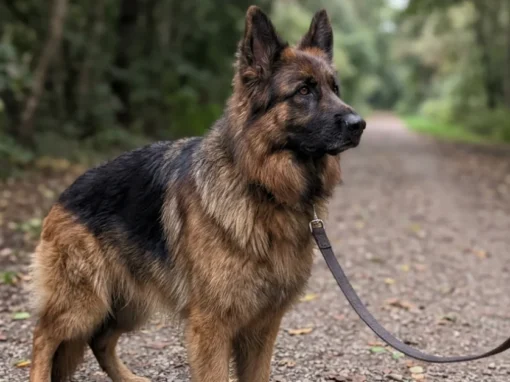
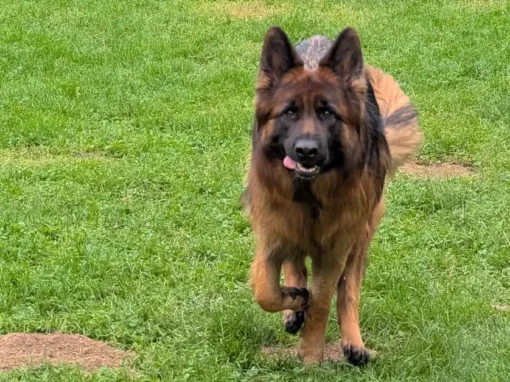
You look at your dog—in our case, Zara, our pedigreed long-haired Shepherd with the attitude of a teenager—and wonder: Where did this breed come from? Who shaped it? Why did it become the dog we know today?
We took a closer look at German Shepherd history. And the story is more fascinating, more complicated, and more impressive than you might expect.
A Modern Breed, Created With a Purpose
Let’s start at the beginning. Before there was a standardized breed called the German Shepherd, there were many different kinds of herding dogs.
In late nineteenth-century Germany, regional sheepdogs varied considerably. Dogs from Thuringia were associated with upright ears and a wolf-like appearance. Dogs from Württemberg were generally larger and more heavily built. Other regions had their own types.
There was not yet a single German Shepherd breed standard or the breed club we know today.
These were working dogs.
They helped shepherds move sheep, keep flocks together, and control where the animals grazed. Their work demanded intelligence, stamina, responsiveness, and a close relationship with the person handling them.
Were they beautiful? Some undoubtedly were.
But the essential question was practical: Could this dog do the job?
That working foundation would become central to the German Shepherd’s development.
Max von Stephanitz: The Man Behind the Breed
Then came one man, one dog, and a decision that helped shape a breed.
In April 1899, German cavalry officer Max von Stephanitz attended a dog show with his friend Artur Meyer.
Von Stephanitz had long admired herding dogs. He wanted to develop a dependable working breed: intelligent, capable, trainable, and physically suited to its work.
At the show, he saw a dog named Hektor Linksrhein.
The dog’s wolf-like appearance caught his attention, but it was his character and intelligence that made the deeper impression.
Von Stephanitz bought him and renamed him Horand von Grafrath.
Horand received the first registration in the new breed’s studbook: SZ1.
On April 22, 1899, the Verein für Deutsche Schäferhunde, usually known as the SV, was founded in Karlsruhe. Von Stephanitz became its first president.
His guiding idea was clear: breeding German Shepherds meant breeding working dogs.
Appearance mattered, but it could not be separated from temperament, soundness, and usefulness.
That principle helps explain both the breed’s extraordinary success and the debates that followed.
A striking dog can turn heads. A dog that can think, learn, work, and cooperate with a person becomes something more.
A partner.
From Herding Sheep to Police Work
As the breed developed, Germany was changing.
Industrialization and changing land use reduced some of the traditional opportunities for herding dogs. Von Stephanitz recognized that his breed needed roles beyond the sheep pasture.
He promoted German Shepherds for police and military service.
Their intelligence, trainability, physical ability, and willingness to work made them suitable for a wide range of demanding tasks.
Tracking. Patrol work. Searching. Guarding. Later, rescue work and other service roles.
The breed’s reputation grew.
We recognize something of that watchfulness in our own dogs.
Schadow, our first German Shepherd, watched over our store. She didn’t need to make a scene. She was simply there: attentive, aware, and difficult to overlook.
That is our experience of one dog, rather than a promise about every German Shepherd. But it helps us understand why people have valued the breed’s alertness for so long.
World War I and a Changing Reputation
During World War I, German Shepherds served in military roles, including carrying messages, guarding, and helping locate wounded soldiers.
Their wartime work brought the breed to wider international attention.
Interest continued to grow after the war. But anti-German sentiment also affected its name.
In Britain, the breed became known as the Alsatian, a name associated with Alsace, the region bordering Germany and France.
The United States also temporarily dropped “German” from the breed’s name.
Today, German Shepherd is the familiar name internationally, but you may still hear Alsatian—particularly in the UK.
Two names. The same breed.
Hollywood, Canine Stars, and Worldwide Recognition
The 1920s brought another kind of exposure.
Rin Tin Tin, found as a puppy in France during World War I and brought to the United States by American soldier Lee Duncan, became a major Hollywood star.
His films introduced German Shepherds to audiences who had never seen one working sheep or serving alongside a handler.
Another German Shepherd, Strongheart, had already helped establish the breed on screen.
Together, these canine stars helped turn a respected working dog into a household name.
The German Shepherd became a hero people could recognize, admire, and imagine living with.
That visibility brought enormous interest.
It also created a familiar challenge: when demand grows, the quality and priorities of breeding can vary.
Working Lines and Show Lines: Different Priorities
The distinction between working lines and show lines did not appear overnight, and it cannot be blamed on a single moment in history.
Over generations, breeders selected for different goals. Those goals shaped differences in appearance, temperament, and working style.
The labels are useful, but they do not tell you everything about an individual dog.
Working Lines
Working-line breeding generally places strong emphasis on working ability, motivation, stamina, confidence, and the capacity to handle demanding tasks.
These dogs may be bred for police work, detection, protection sports, search work, or other activities requiring sustained effort and concentration.
Some have intense drive and need substantial training and mental engagement.
They can be excellent companions in suitable homes, but their needs may be more than an owner expects.
A working-line label is not a guarantee of temperament, health, or suitability. The individual dog, its breeding, and its upbringing still matter.
Show Lines
Show-line breeding places greater emphasis on appearance and performance in the conformation ring.
That does not mean every show-line dog lacks working ability. Nor does it mean every show-line dog is unhealthy.
The concern arises when physical features become exaggerated.
A strongly sloping outline in a photograph is not, by itself, a diagnosis. The way a dog is stacked for a show or photo affects how its back and hindquarters appear.
However, excessive rear angulation and weak hindquarters can compromise stable, efficient movement. The UK breed standard specifically discourages these features.
The question should always be whether a dog can move comfortably and function well.
Health, sound movement, and temperament matter in every line.
Health Concerns That Deserve Attention
German Shepherds are capable, athletic dogs. They also have recognized health risks.
Those risks have complex causes. It would be misleading to attribute every condition to show breeding, popularity, or a particular body shape.
Hip Dysplasia
Hip dysplasia develops as a dog grows and involves instability or an abnormal fit in the hip joint.
It can contribute to pain, impaired movement, and osteoarthritis.
Genetics play an important role. Growth, body weight, nutrition, and other environmental factors can also influence how the condition develops.
Screening breeding dogs helps inform responsible breeding decisions, but it cannot guarantee that every puppy will be unaffected.
Elbow Dysplasia
Elbow dysplasia covers developmental problems affecting the elbow joint.
It can cause lameness, pain, and arthritis. Inherited factors are important, which is why appropriate screening of both parents matters.
Degenerative Myelopathy
Degenerative myelopathy, or DM, is a progressive disease affecting the spinal cord.
It can begin with weakness and loss of coordination in the hind legs and eventually lead to paralysis.
There is currently no cure. Veterinary-guided rehabilitation and supportive care may help maintain mobility and quality of life, but they do not reverse the underlying disease.
A genetic risk result alone does not establish a diagnosis. Similar signs can have other causes, so a dog showing weakness or coordination problems needs veterinary assessment.
What Illness Has Taught Us
We know what it means to lose a dog to illness.
Schadow came to us from a shelter in 1997. She was already more than a year old and had been described as unreliable in her temperament.
We took a chance on her.
She became one of the most loyal, loving dogs we have ever known. In 2008, we had to say goodbye because of a skin disease we could not bring under control.
Ayla, our beautiful long-haired Shepherd, came to us from Belgium through a classified listing. She also suffered from a persistent skin disease.
There were years of treatment, testing, and hoping.
In September 2025, we had to let her go at nine and a half years old. Far too soon for us.
Were their skin conditions related to the breed?
We do not know.
Their stories are not proof of a hereditary problem. But living through them made us take health, veterinary care, and breeding decisions even more seriously.
That was part of our thinking when we chose Zara’s breeder.
A pedigree helps trace ancestry. It does not guarantee health.
What matters is the evidence behind the breeding: appropriate health testing, honest discussion of risks, and careful attention to temperament.
After World War II: A Breed Known Around the World
German Shepherds were again used in military service during World War II.
In the decades that followed, the breed remained internationally recognized for its versatility.
Today, German Shepherds work in police services, detection, search and rescue, and other specialist roles. They have also played an important part in the history of guide dogs and assistance work.
And, of course, they share homes with families around the world.
Here in the Netherlands, they have long been a familiar sight at training clubs, in parks, and in everyday family life.
The same is true in many other countries, including the United States, Canada, the United Kingdom, and Australia.
Yet the question remains:
How do we preserve the qualities of a capable working dog while also breeding dogs that can live well in modern homes?
What Is a German Shepherd, Really?
After nearly thirty years with this breed—with Schadow, Troy, Ayla, Zara, and now Odin—we have our own answer.
A German Shepherd is more than a beautiful dog.
This is an intelligent, sensitive animal whose history is closely tied to working with people.
Not every German Shepherd is suited to every household. But in the right home, with appropriate care and guidance, the breed can be an extraordinary companion.
In our experience, three things matter especially.
Clarity
A German Shepherd does not need an owner who constantly proves who is in charge.
The dog needs someone calm, predictable, and consistent. Someone who sets understandable boundaries and teaches what is expected.
When expectations are unclear, a dog may develop its own responses—and those responses may not fit comfortably into family life.
Purpose
Your dog does not need a police assignment.
Purpose can come from scent games, training, suitable sports, play, or other activities that use the dog’s mind and body.
A lack of appropriate outlets can contribute to frustration and unwanted behavior. The answer is not simply more exercise, either: learning to settle matters too.
Connection
Despite their tough reputation, many German Shepherds form close bonds with their families.
Schadow would use her nose to nudge our children closer together when they wandered apart.
Ayla watched over the dogs she considered part of her pack at the dog park.
And Zara, our adolescent whirlwind, rests her head in our lap at night and melts into the attention.
Those are the moments that stay with us.
Not always easy. Not the right dog for everyone.
But for us, an extraordinary breed.
Thinking About Getting a German Shepherd?
Start with honest questions—both for the breeder or rescue and for yourself.
Ask for Evidence, Not Just Reassurance
Choose a breeder who is open about health, temperament, and how the puppies are raised.
Ask to see official hip and elbow screening results for both parents, along with other tests relevant to the breed and breeding dogs.
Where possible, verify those results through the appropriate registry or screening organization in your country.
A pedigree tells you about ancestry. It is not a substitute for health screening.
If you are adopting, ask for the available veterinary records, behavior history, and an honest assessment of the dog’s needs.
Look at Temperament and Early Experiences
Visit the puppies where they are being raised and, where possible, meet their mother.
Her behavior provides useful information, but it cannot predict everything about a puppy.
Temperament develops through a combination of inherited traits, early experiences, socialization, training, and the individual dog.
Marked fearfulness, persistent nervousness, or aggressive behavior deserves careful discussion. Do not let pressure to buy stop you from asking questions.
Be Honest About Your Life
Do you have time for daily care, training, appropriate exercise, and mental engagement?
Can you provide companionship, structure, and opportunities to rest?
Are you prepared for adolescence, shedding, veterinary bills, and a large dog whose needs will change over time?
A German Shepherd can be a wonderful choice. It should also be an informed one.
If you are unsure, speak with a reputable breed club, rescue organization, veterinarian, or suitably qualified trainer before committing.
From Horand to Zara
It is remarkable to think that a dog purchased at a show in 1899 helped shape a breed recognized around the world.
From Horand von Grafrath, studbook number SZ1, to Zara—our young long-haired Shepherd with the energy of three dogs—stretches more than a century of breeding history.
A history of work, service, companionship, and changing expectations.
There are achievements to admire and difficult questions worth asking.
That is what makes the story worth telling.
Want to read more about life with German Shepherds, including our own dogs? Explore their profiles and stories here on Silly Shepherds, or share your experiences in our Silly Shepherds Facebook group. 🐾
The understanding that a German Shepherd needs clarity rather than a contest for dominance is also why we wrote The Language of the Shepherd.
A practical approach to living with your dog—and understanding the individual in front of you.
Sources and Further Reading
- Verein für Deutsche Schäferhunde: History of the SV
- American Kennel Club: German Shepherd Dog History
- American Kennel Club: Facts About the German Shepherd Dog
- The Royal Kennel Club: German Shepherd Dog Breed Standard
- American College of Veterinary Surgeons: Canine Hip Dysplasia
- American College of Veterinary Surgeons: Canine Elbow Dysplasia
- Cornell University College of Veterinary Medicine: Degenerative Myelopathy